
Your equipment keeps breaking down from wear and tear. This causes expensive downtime. You need a material that can withstand the toughest conditions, but what is the right choice?
Stellite is a family of cobalt-chromium alloys known for incredible wear resistance, corrosion resistance, and strength at high temperatures. These alloys contain hard carbide particles in a tough cobalt matrix, making them ideal for protecting critical industrial components from failure in harsh environments.
What makes Stellite so special? It’s not just one single material but a whole family of alloys designed for specific challenges. Let’s look closer at why engineers and maintenance managers trust Stellite for their most demanding jobs. We will explore how it works, the different types available, and where it is used in the real world.
What Makes Stellite So Wear-Resistant?
You know you need wear resistance, but the technical details can be confusing. You worry about choosing a material based on marketing instead of solid science. Let’s break it down simply.
Stellite’s incredible wear resistance comes from its unique internal structure. It has very hard carbide particles locked inside a tough cobalt alloy matrix. This special combination fights off abrasion, erosion, and galling, even when things get extremely hot.
To understand this better, think of reinforced concrete. You have hard rocks mixed into strong cement. On its own, the cement can crack. The rocks alone just form a loose pile. But when you combine them, you get a material that is both strong and tough. Stellite works in a similar way.
The Two-Part Secret to Stellite’s Strength
- The Cobalt-Chromium Matrix:
This is the tough and corrosion-resistant foundation of the alloy. The cobalt base maintains strength at high temperatures, while chromium provides excellent resistance to oxidation and corrosion. - The Hard Carbides:
Elements like tungsten and carbon form extremely hard carbide particles during production. These carbides protect the surface from abrasive wear and erosion.
I remember a client in the power generation industry whose valve seats failed every few months because of high-pressure steam erosion. After switching to Stellite 6 overlay valve seats, the service life increased dramatically to several years. The material performance made a significant difference in operational reliability.
Which Stellite Grade is Right for My Application?
You see names like Stellite 6, Stellite 12, and Stellite 1. They all sound similar, but choosing the wrong grade can lead to unnecessary costs and poor performance.
The correct Stellite grade depends on the specific wear condition. Stellite 6 offers balanced wear and corrosion resistance, Stellite 1 provides maximum hardness for severe abrasion, and Stellite 12 delivers a balance between hardness and toughness.
There is always a balance between hardness and toughness. Extremely hard materials resist abrasion well but may crack under heavy impact. Tougher materials resist impact better but may wear faster. The key is identifying the main failure mechanism in your application.
Common Stellite Grades and Their Uses
| Grade | Key Characteristics | Typical Hardness (HRC) | Common Applications |
|---|---|---|---|
| Stellite 6 | Balanced wear, corrosion, and heat resistance | ~40 HRC | Valve seats, pump shafts, bearings, erosion shields |
| Stellite 1 | Extreme hardness and abrasion resistance | ~55 HRC | Scraper blades, saw tips, extruder screws |
| Stellite 12 | Good balance between hardness and toughness | ~48 HRC | Pump sleeves, valve stems, bushings |
| Stellite 21 | Excellent corrosion and cavitation resistance | ~35 HRC | Valve trim, turbine blades, chemical mixers |
If your primary concern is corrosion combined with wear, Stellite 6 is usually an excellent starting point. For severe abrasive conditions, Stellite 1 offers superior hardness. In highly corrosive high-temperature environments, Stellite 21 may be the best option.
How is Stellite Applied in Real-World Industries?
Theory is important, but industrial performance matters most. Stellite alloys are widely used because they solve real-world wear and corrosion problems across many industries.
Stellite is commonly used in oil and gas valves, power plant turbine components, steel processing equipment, and plastic extrusion machinery. It dramatically extends equipment life and reduces maintenance downtime in severe service conditions.
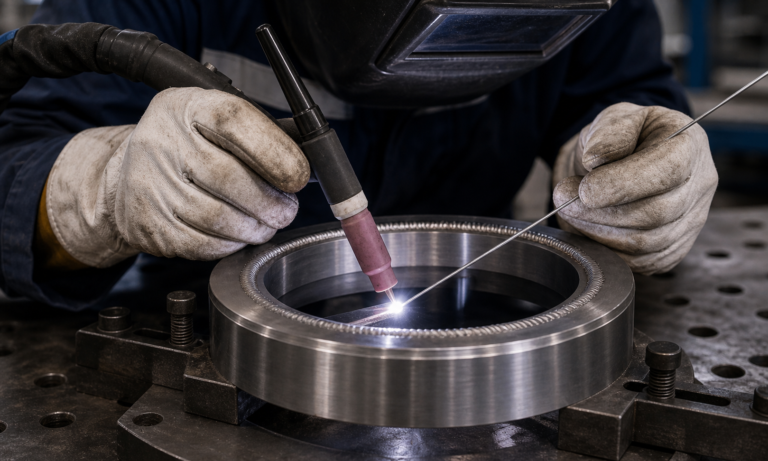
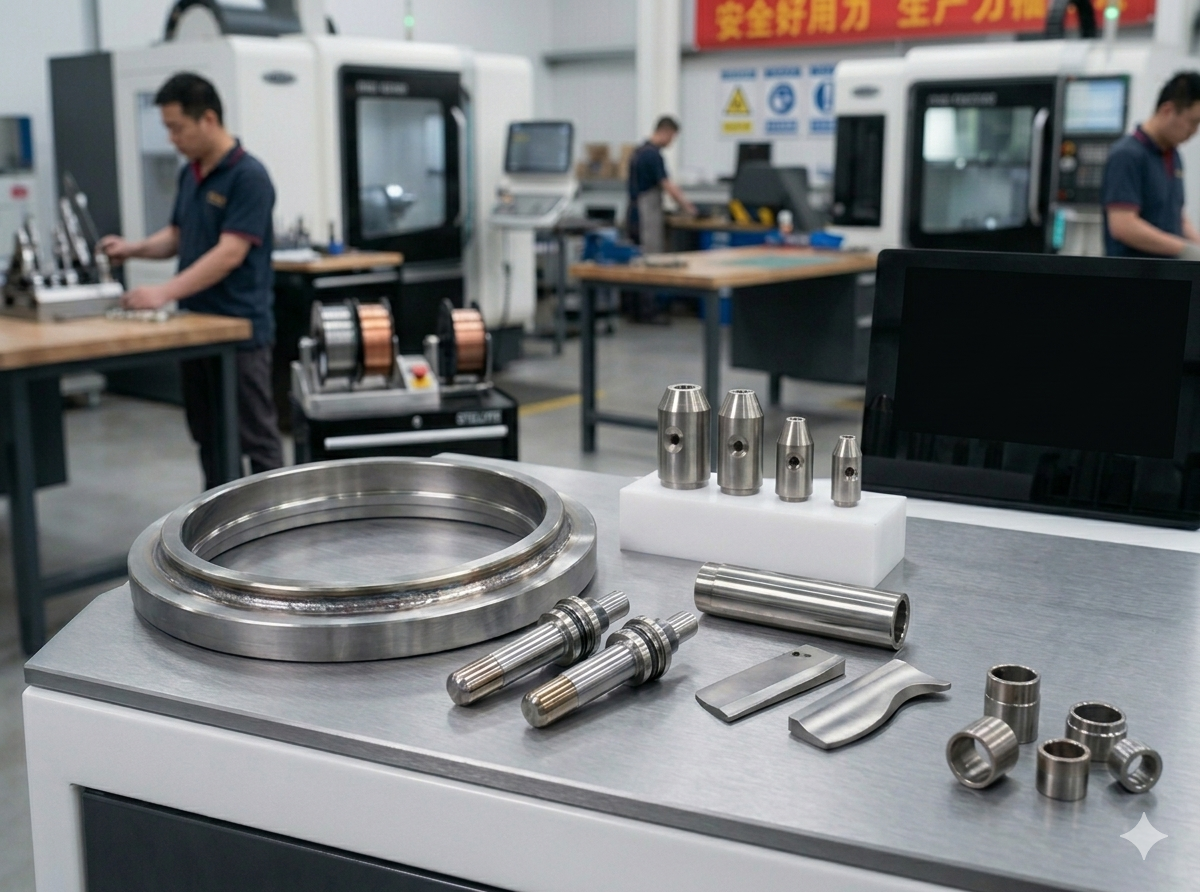
Stellite can be manufactured as solid parts or applied as a hardfacing overlay using welding technologies such as PTA (Plasma Transferred Arc) welding. This flexibility allows critical wear areas to be protected without manufacturing the entire component from solid cobalt alloy.
Oil & Gas Industry
In oil and gas applications, valve seats, balls, and gates operate under high pressure while exposed to corrosive fluids and abrasive particles. Stellite 6 overlays provide long-lasting sealing performance and excellent galling resistance.
Power Generation
Power plants use Stellite on turbine blades and valve trim to resist high-temperature steam erosion. This improves operational reliability and extends maintenance intervals.
Steel Processing
In steel mills and hot-dip galvanizing lines, components often operate in molten zinc environments around 450°C (842°F). Standard materials fail quickly under these conditions, while solid Stellite bushings provide significantly longer service life.
Can I Source Custom Stellite Parts from China?
You know you need Stellite components, but international sourcing can feel complicated. Concerns about quality, communication, and supplier reliability are common.
Yes, high-quality custom Stellite parts can be sourced from China when working with a reliable and experienced supplier. Professional coordination, inspection, and export management ensure consistent quality and dependable delivery.
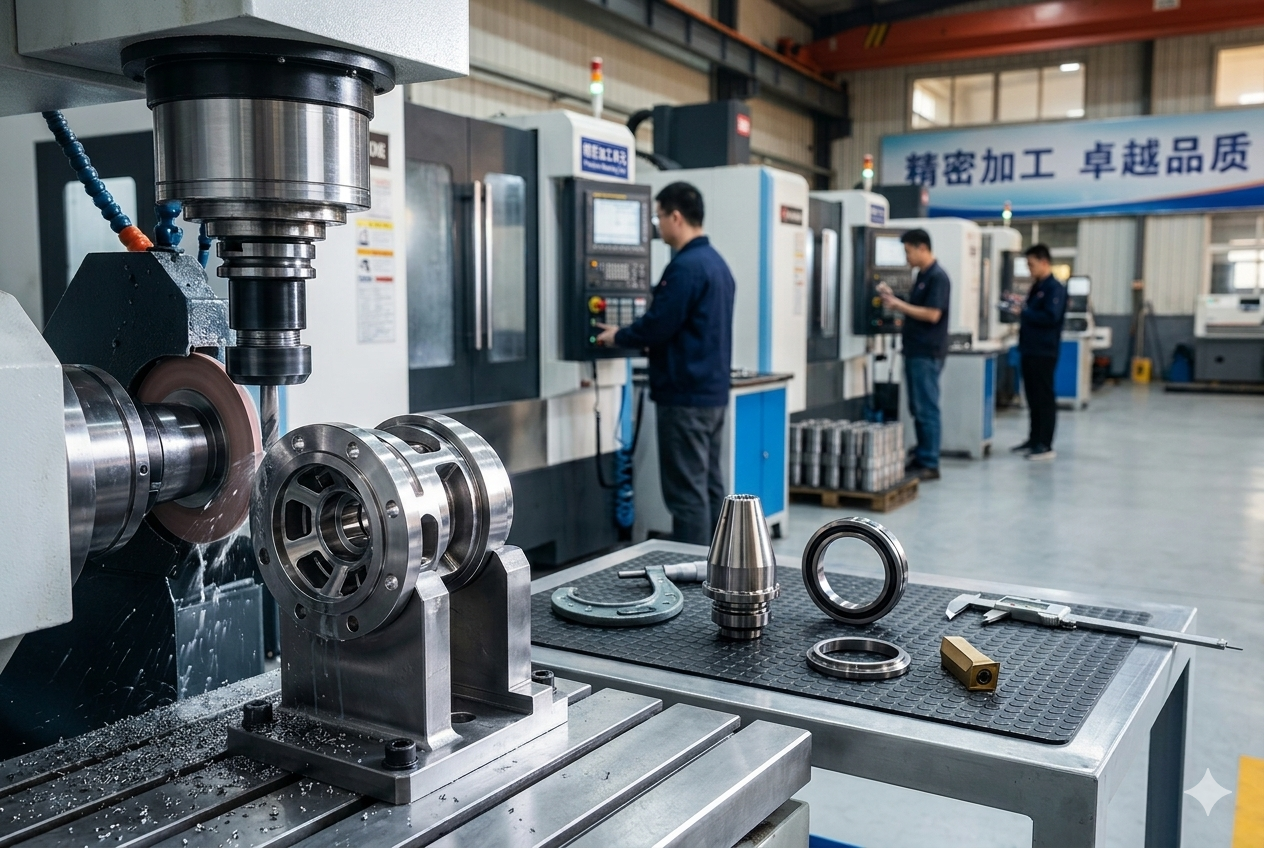
China offers strong manufacturing capabilities for Stellite casting, machining, and welding applications. However, successful sourcing requires careful supplier management and technical coordination.
Our Stellite Sourcing Process
- Technical Review:
Review drawings, samples, and application requirements to fully understand performance expectations. - Supplier Matching:
Select qualified manufacturing partners experienced in cobalt alloy production. - Production Coordination:
Manage technical communication, schedules, and production follow-up. - Quality Inspection:
Perform pre-shipment inspections for dimensions, hardness, and surface finish. - Export & Logistics:
Coordinate packaging, shipping, and export documentation for safe delivery worldwide.
This process helps reduce sourcing risks and creates a more reliable supply chain for critical wear-resistant components.
Conclusion
Stellite alloys provide outstanding resistance to wear, corrosion, and high temperatures across many industrial applications. Selecting the correct grade and working with a reliable supplier are essential for improving equipment reliability and reducing operational downtime.