

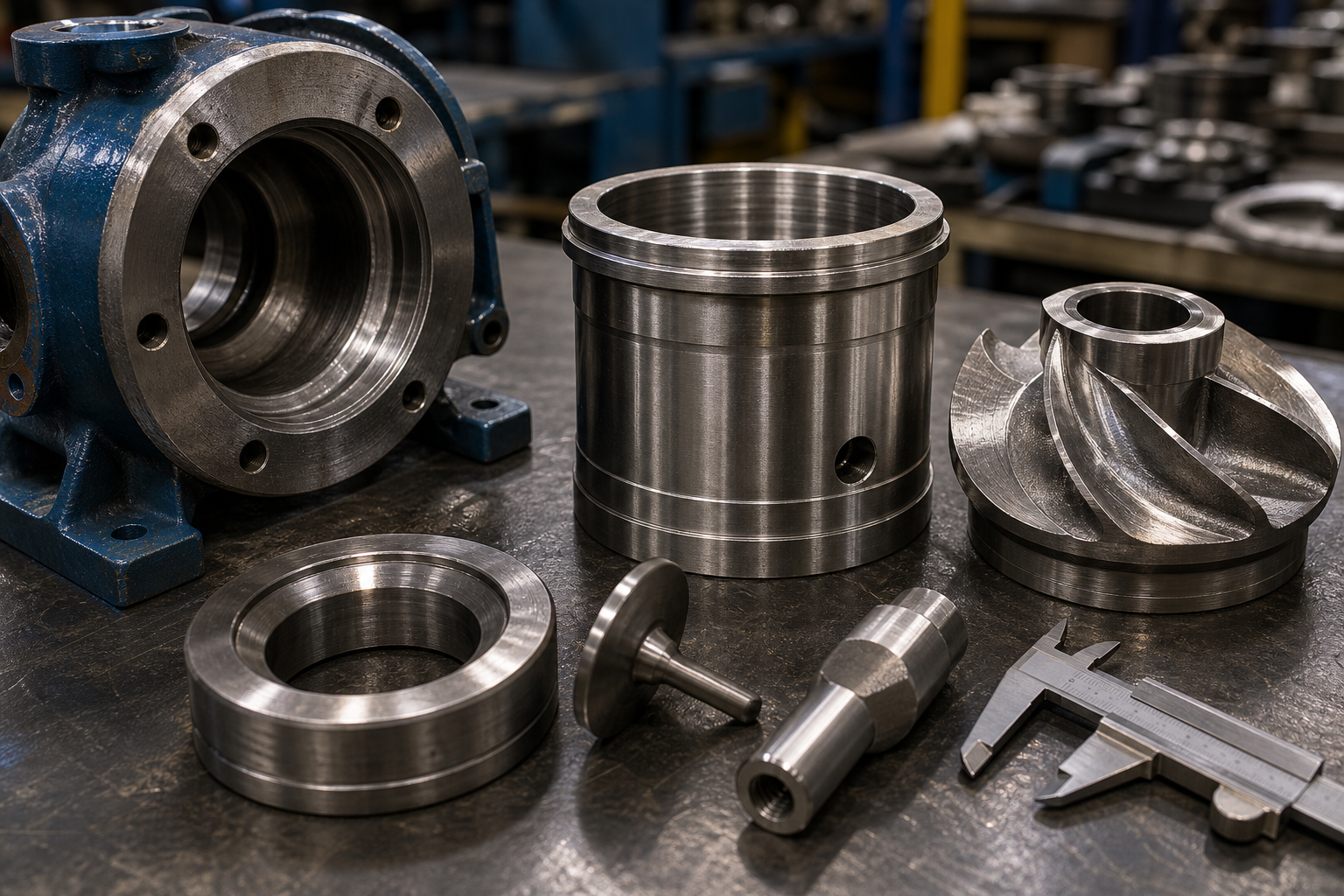
Stellite 21 is often misunderstood because it does not win the simple hardness comparison. If the only question is which Stellite grade is harder, Stellite 21 is usually not the answer. But many real components do not fail because they need the highest hardness. They fail because corrosion, cavitation, erosion, impact, thermal fatigue, and moderate wear arrive together.
That is where Stellite 21 becomes useful. It is a cobalt-chromium-molybdenum alloy chosen for corrosion resistance, toughness, cavitation resistance, thermal stability, and overall service reliability. It is not a direct replacement for Stellite 6 or Stellite 12 in every wear part. It is the grade to consider when the service condition punishes brittle or overly hard materials.
What Is Stellite 21 Alloy?
Stellite 21 is a CoCrMo cobalt-based alloy. Compared with more wear-focused cobalt grades, it has a lower carbon, more corrosion-oriented chemistry and a tougher matrix. That makes it valuable in components where the surface must resist chemical attack, liquid impact, cavitation, thermal cycling, and mechanical loading without cracking or rapidly roughening.
In engineering selection, Stellite 21 should be viewed as a balanced corrosion and toughness alloy with useful wear resistance, not as a maximum-hardness alloy. This distinction prevents many wrong applications.
Quick Answer: When Stellite 21 Is the Right Choice
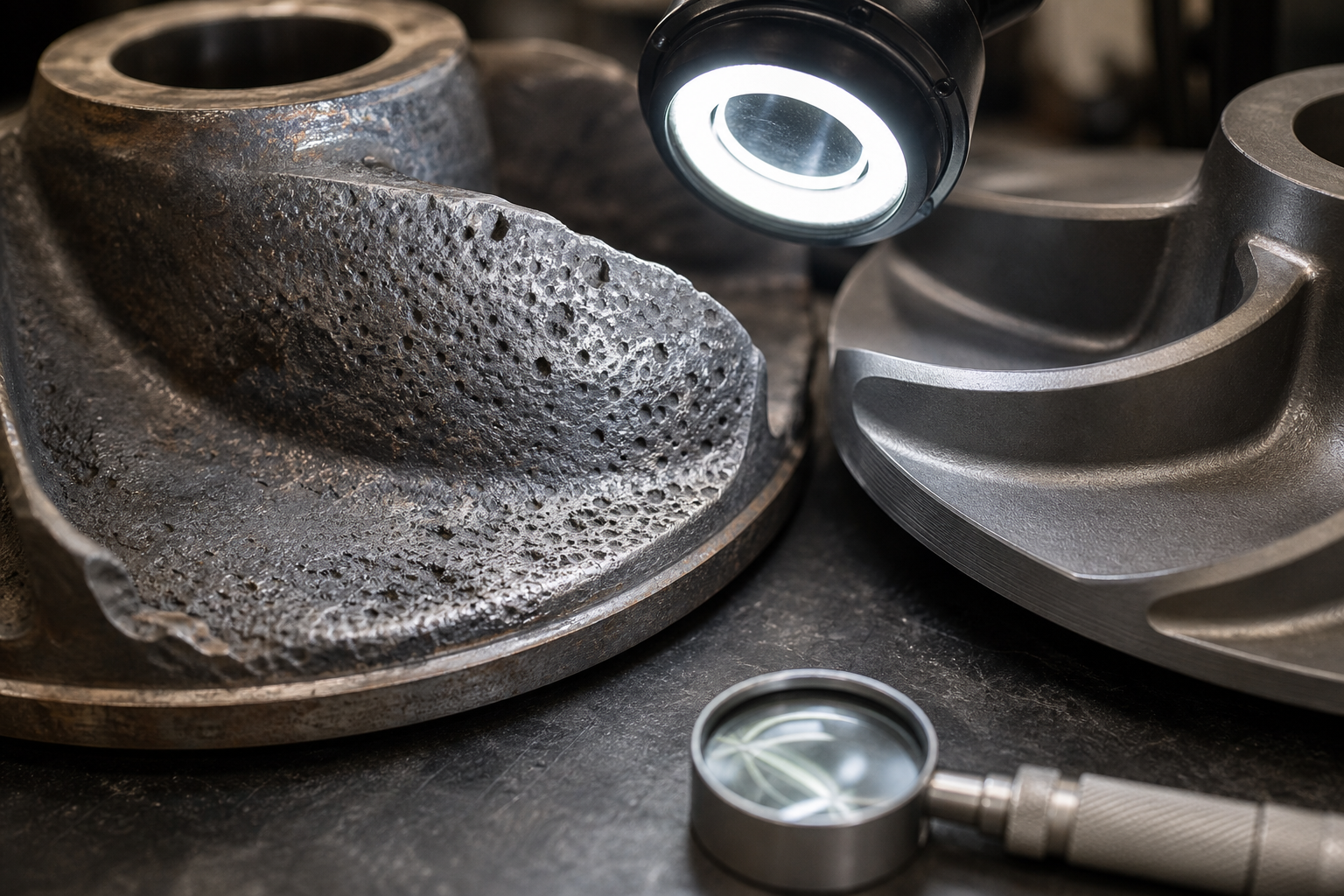
Choose Stellite 21 when the part needs better corrosion resistance, cavitation resistance, impact tolerance, or thermal fatigue resistance than a harder wear grade can comfortably provide. It is often a good candidate where Stellite 6 is not corrosion-stable enough, or where Stellite 12 would be too hard and crack-sensitive.
The part sees cavitation bubbles, liquid impact, or turbulent flow.
Corrosion and erosion act together rather than separately.
Thermal cycling or thermal fatigue is part of the failure history.
Impact, vibration, or mechanical shock makes brittle hard alloys risky.
Moderate wear resistance is enough, but service stability is critical.
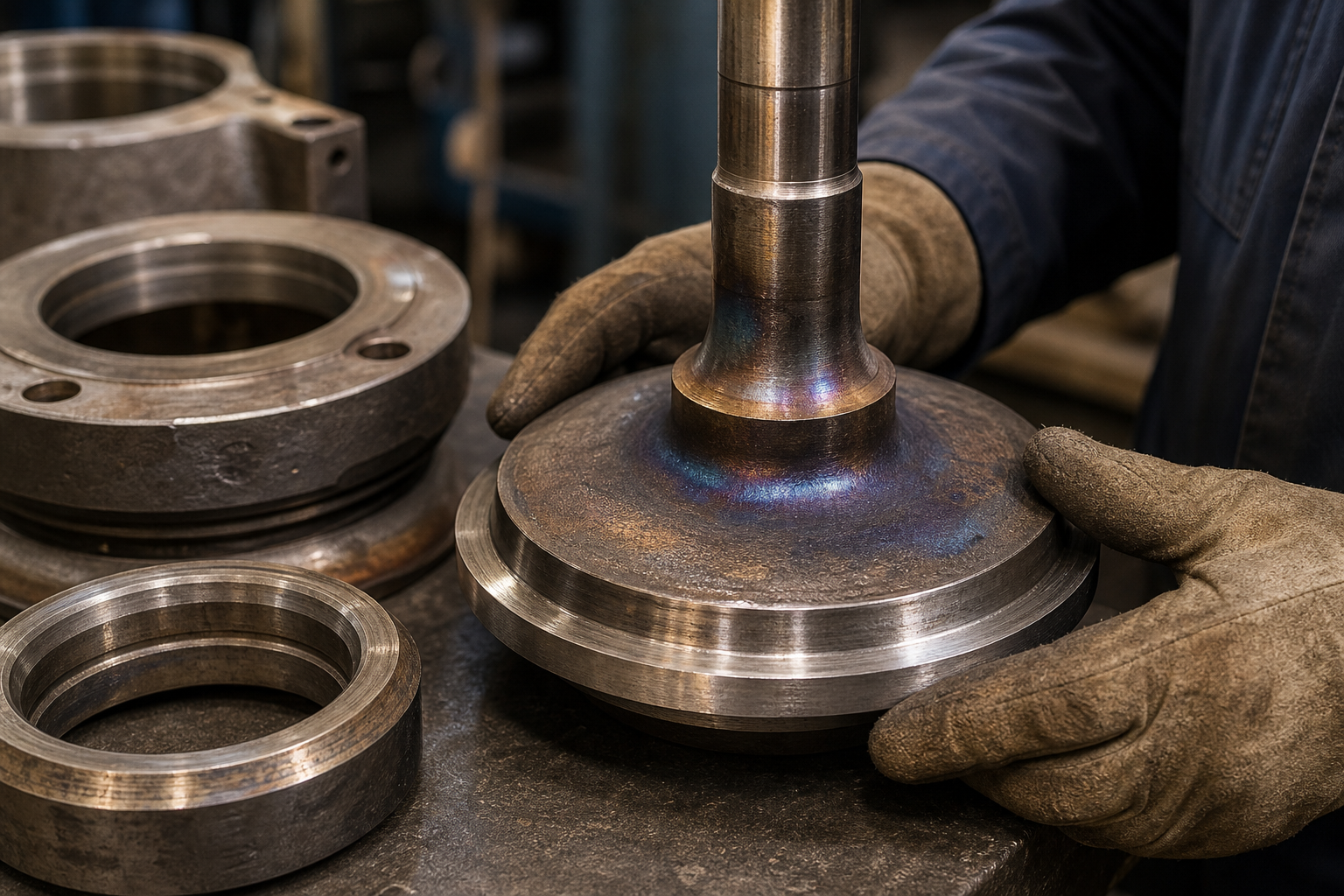
Key Properties of Stellite 21
Stellite 21 offers good corrosion resistance, cavitation resistance, erosion resistance, impact tolerance, thermal fatigue resistance, and moderate wear resistance. The practical benefit is not one extreme property. The practical benefit is that the surface stays serviceable when several damage mechanisms compete.
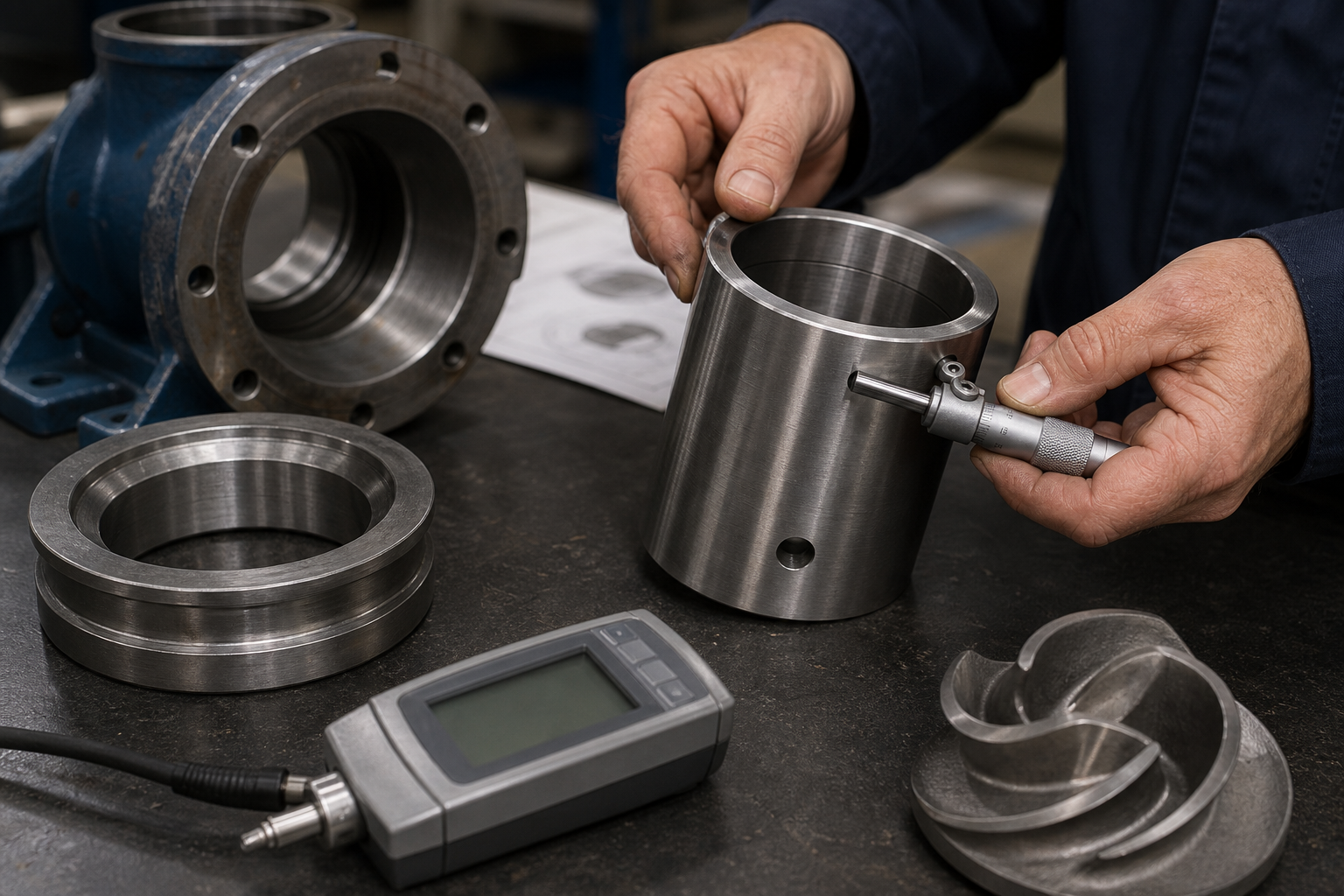
A harder grade can resist abrasive cutting better, but it may crack or spall when exposed to shock or thermal cycling. A stainless steel may resist mild corrosion, but it can gall, erode, or cavitate more quickly. Stellite 21 fills the space between these choices.
Stellite 21 Chemical Composition and Element Roles
Exact chemistry depends on the standard and supplier, so composition should always be confirmed by certificate. The important engineering point is how the main elements work together.
| Element | Role in Stellite 21 |
| Cobalt | Forms the stable matrix and supports hot strength and toughness. |
| Chromium | Improves corrosion and oxidation resistance through a protective surface film. |
| Molybdenum | Strengthens the alloy and supports corrosion resistance in demanding media. |
| Nickel | Can contribute to matrix stability and corrosion behavior depending on specification. |
| Carbon | Kept lower than in high-hardness grades, giving less carbide volume but better toughness. |
This chemistry explains why Stellite 21 behaves differently from Stellite 6 or Stellite 12. It is less about building a very hard carbide network and more about maintaining a stable, corrosion-resistant, damage-tolerant working surface.
Stellite 21 vs Stellite 6
Stellite 6 is the common general wear grade. It is strong in sliding wear, anti-galling service, valve trim, bushings, seats, and hardfaced surfaces where a good balance of wear and corrosion resistance is needed. Stellite 21 shifts the balance toward corrosion resistance, toughness, cavitation resistance, and thermal fatigue behavior.
If the failure is mainly galling or abrasive wear with moderate corrosion, Stellite 6 may still be the better and more economical choice. If the surface is being damaged by cavitation, corrosive flow, thermal cycling, or impact, Stellite 21 deserves a closer look.
Stellite 21 vs Stellite 12
Stellite 12 is a harder, more wear-focused grade. It is often selected when severe abrasion or high-pressure wear is the main problem. Stellite 21 is different. It is selected when the component must survive a more complex environment where cracking, corrosion, cavitation, or thermal fatigue matters as much as wear.
A useful rule is this: choose Stellite 12 when the surface is being cut away by hard particles and the load is well controlled. Choose Stellite 21 when the surface is being attacked by fluids, corrosion, impact, and temperature cycling, and when toughness is part of the requirement.
Applications Where Stellite 21 Performs Well
Valve components exposed to corrosion, cavitation, or thermal cycling.
Pump sleeves, wear rings, and hydraulic components exposed to liquid impact.
Petrochemical equipment where corrosion-wear and erosion happen together.
Power generation components exposed to steam, flow erosion, or heat cycling.
Aerospace and hot-service components requiring stable cobalt alloy behavior.
Custom wear-resistant and corrosion-resistant parts where toughness is more important than maximum hardness.
Stellite 21 in Valve and Pump Components
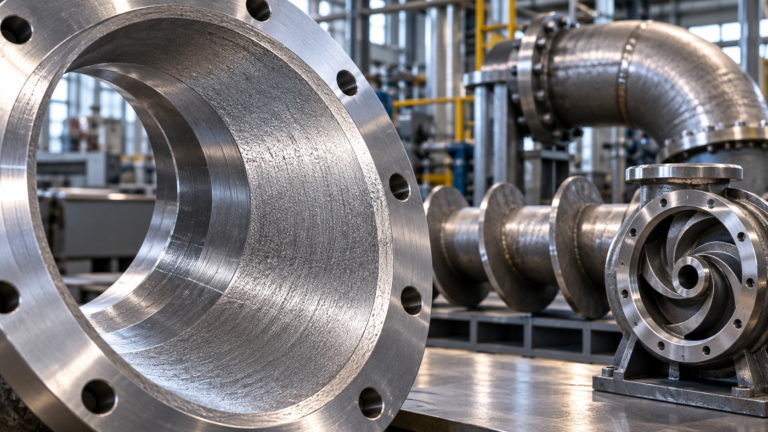
Valve trim, seats, plugs, sleeves, and pump components are common examples, but Stellite 21 should not be reduced to a valve trim material. In valves, it may be selected when cavitation, corrosive media, and thermal cycling make a harder but less forgiving alloy risky. In pumps, it may help where liquid impact, corrosion, and moderate wear damage the surface together.
The key is to match it to the failure mode. If a valve seat is failing from pure abrasive sand cutting, Stellite 21 may not be hard enough. If a pump sleeve is failing from corrosion plus cavitation pitting, it may be a stronger candidate than a higher-hardness grade.
Cavitation, Erosion, and Corrosion Resistance
Cavitation damage occurs when vapor bubbles collapse near the surface and create repeated micro-impact. The surface may develop pits, roughness, and eventually material loss. Erosion adds directional flow damage, often with particles or droplets. Corrosion weakens the surface and can accelerate both mechanisms.
Stellite 21 performs well in these combined conditions because it is not only hard. It has a matrix that tolerates repeated liquid impact better than more brittle surfaces, and it has chemistry that supports corrosion resistance. This is why it is often considered where fluid-driven damage is more important than dry abrasion.
Manufacturing Options for Stellite 21 Components
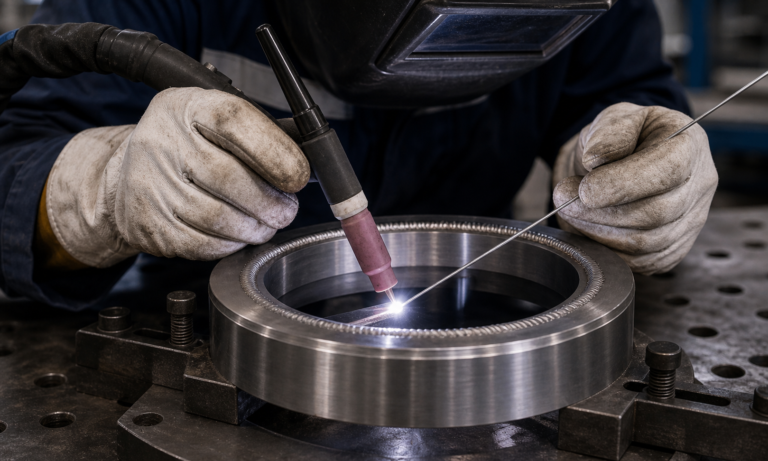
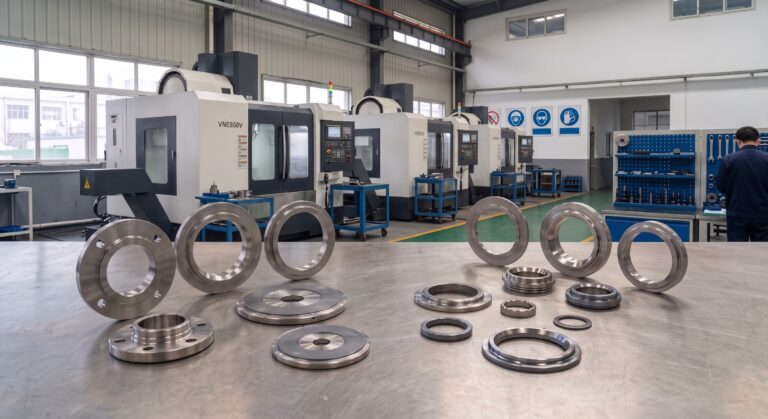
Stellite 21 can be supplied as cast components, machined bar parts, powder metallurgy parts, hardfacing deposits, laser cladding overlays, and custom wear or corrosion-resistant components. Each route affects the final microstructure, defect risk, dimensional accuracy, cost, and lead time.
Casting may suit complex shapes but requires control of defects and final machining. Bar machining may suit precision components but can be costly. Hardfacing and cladding place the alloy only on the working surface, but dilution, cracking, bonding, and finished thickness must be controlled. The manufacturing method should be chosen together with the service condition, not after the material grade is already fixed.
When Stellite 21 May Not Be the Best Choice
Stellite 21 may not be the best choice for extreme abrasive wear where a harder grade such as Stellite 12 or a carbide solution is required. It may also be unnecessary when Stellite 6 already provides enough wear and corrosion resistance at a lower cost or with simpler manufacturing.
It should also be reviewed carefully in specific corrosive environments. No cobalt alloy is universal. Media chemistry, temperature, concentration, velocity, solids content, and project standards all matter.
How to Specify Stellite 21 Parts
Define the applicable material standard or agreed chemistry range.
State the manufacturing route: casting, machining from bar, hardfacing, PTA, laser cladding, or powder metallurgy.
Specify hardness as a typical range suitable for the process, not as a vague promise.
Define dimensions, tolerances, surface roughness, and contact geometry.
Require inspection for cracks, porosity, bonding quality, and surface defects where relevant.
Request material certificates, process records, and traceability for critical parts.
Failure Mechanisms Where Stellite 21 Fits Best
Stellite 21 fits applications where corrosion, cavitation, liquid impact, thermal cycling, and toughness matter as much as wear. It should be considered when harder grades risk cracking, brittle edge damage, or poor performance under combined chemical and mechanical attack.
It is less convincing where dry abrasive cutting is the main failure mode and the part has little impact or corrosion exposure. In that case, a harder cobalt alloy such as Stellite 6 or Stellite 12 may be more appropriate.
Manufacturing and Procurement Checks
Before ordering Stellite 21 parts, define whether the component will be cast, machined, welded, PTA deposited, or laser clad. Confirm chemistry, hardness expectations, heat treatment or stress relief practice, NDT, surface finish, dimensional tolerance, and traceability. For valve and pump parts, also define the mating material and the expected contact or cavitation zone.
FAQ
How is Stellite 21 different from Stellite 6?
Stellite 6 is more focused on general wear and anti-galling behavior. Stellite 21 is more focused on corrosion resistance, cavitation resistance, toughness, and thermal fatigue stability.
How is Stellite 21 different from Stellite 12?
Stellite 12 is harder and better for severe abrasive wear. Stellite 21 is tougher and better suited to corrosion, cavitation, impact, and thermal cycling.
Is Stellite 21 corrosion resistant?
Yes, it has good corrosion resistance in many environments, but the exact media and temperature must be checked. It should not be treated as universal for all corrosion conditions.
Is Stellite 21 suitable for valve and pump parts?
Yes, especially where cavitation, corrosion-wear, liquid impact, or thermal fatigue are part of the failure mechanism. It is not always the best choice for pure abrasive wear.
Can Stellite 21 be hardfaced or laser clad?
Yes, but the process must control dilution, bonding, cracking, deposit thickness, machining, and final inspection.
Conclusion
Choose Stellite 21 when the application needs more than hardness. It is strongest as a balanced alloy for corrosion, cavitation, erosion, impact, thermal fatigue, and moderate wear. Choose Stellite 6 for more general wear and anti-galling service. Choose Stellite 12 when severe abrasion is the main threat. The right decision starts with the failure mechanism, not the grade name.

Great content! Keep up the good work!
thank you!