
What Is Stellite 720
The Stellite 700 family includes Stellite 703, 704, 706, 712, and 720. These alloys retain the cobalt chromium base used by traditional Stellite wear alloys, but molybdenum replaces most or all of the tungsten used in grades such as Stellite 6 and Stellite 12. Stellite 700 series are wear and corrosion resistant alloys for reducing and complex environments.
Stellite 720 sits at the high carbon and high molybdenum end of this family. Carbon promotes a large carbide volume, while molybdenum strengthens the matrix and participates in molybdenum rich carbides. The resulting microstructure is hard and wear focused, but less tolerant of impact and strain than lower carbon grades.
Stellite 720 Chemical Composition
The following nominal composition is published for Stellite 720 UltraFlex cladding.
| Element | Nominal mass percent | Metallurgical role |
|---|---|---|
| Cobalt | Balance | Cobalt rich matrix with useful hot wear behavior |
| Chromium | 33 | Chromium rich carbides and passive film formation |
| Molybdenum | 18 | Solid solution strengthening and molybdenum rich carbides |
| Carbon | 2.45 | High carbide volume and high hardness |
| Nickel | 3 maximum | Controlled residual or minor constituent |
| Iron | 3 maximum | Controlled residual or dilution sensitive constituent |
Microstructure and Wear Mechanism
Published metallurgical studies describe Stellite 720 as a hypereutectic alloy. Primary chromium rich carbides and molybdenum containing carbides are distributed through a cobalt rich solid solution matrix. The high carbide fraction resists cutting and plowing by hard particles, while chromium and molybdenum support corrosion resistance in environments where wear and chemical attack occur together.
Carbide quantity is not the only variable controlling service behavior. Carbide size, distribution, matrix chemistry, coating dilution, residual stress, surface finish, and the angle of particle impact all affect the result. Large hard carbides can resist abrasion but may chip at a sharp edge or under repeated impact. This is why hardness alone cannot predict every wear test or field application.
Stellite 706 712 and 720 Compared with Stellite 6 12 and 20
| Grade | Main alloy system | Carbon and carbide level | Published hardness | Technical distinction |
|---|---|---|---|---|
| Stellite 706 | Co Cr Mo | Lower than 712 and 720 | Product and process dependent | Lower carbide fraction among the three compared 700 grades |
| Stellite 712 | Co Cr Mo | Intermediate between 706 and 720 | Product and process dependent | Intermediate carbide fraction and molybdenum content |
| Stellite 720 | Co Cr Mo | About 2.45 percent C; high carbide fraction | 53 to 60 HRC for UltraFlex | High carbon and molybdenum hypereutectic grade |
| Stellite 6 | Co Cr W | 0.9 to 1.4 percent C | 36 to 45 HRC | General purpose balance of wear galling and impact resistance |
| Stellite 12 | Co Cr W | 1.4 to 2.0 percent C | 45 to 51 HRC | Higher carbide loading and abrasion resistance than Stellite 6 |
| Stellite 20 | Co Cr W | 2.5 percent C | 53 to 62 HRC | High tungsten and carbide loading with low shock resistance |
Within the three compared 700-series grades, carbon and molybdenum rise from Stellite 706 through Stellite 712 to Stellite 720, increasing carbide volume and the general hardness tendency. Stellite 6, Stellite 12, and Stellite 20 use tungsten instead of the high molybdenum levels used by the 700 series, and they also progress toward greater carbide loading. The two sequences are related in design logic but are not direct equivalents. Kennametal states that replacing tungsten with molybdenum improves corrosion resistance in reducing environments, while the 700-series counterparts are more brittle than the corresponding traditional alloys.
Typical Applications
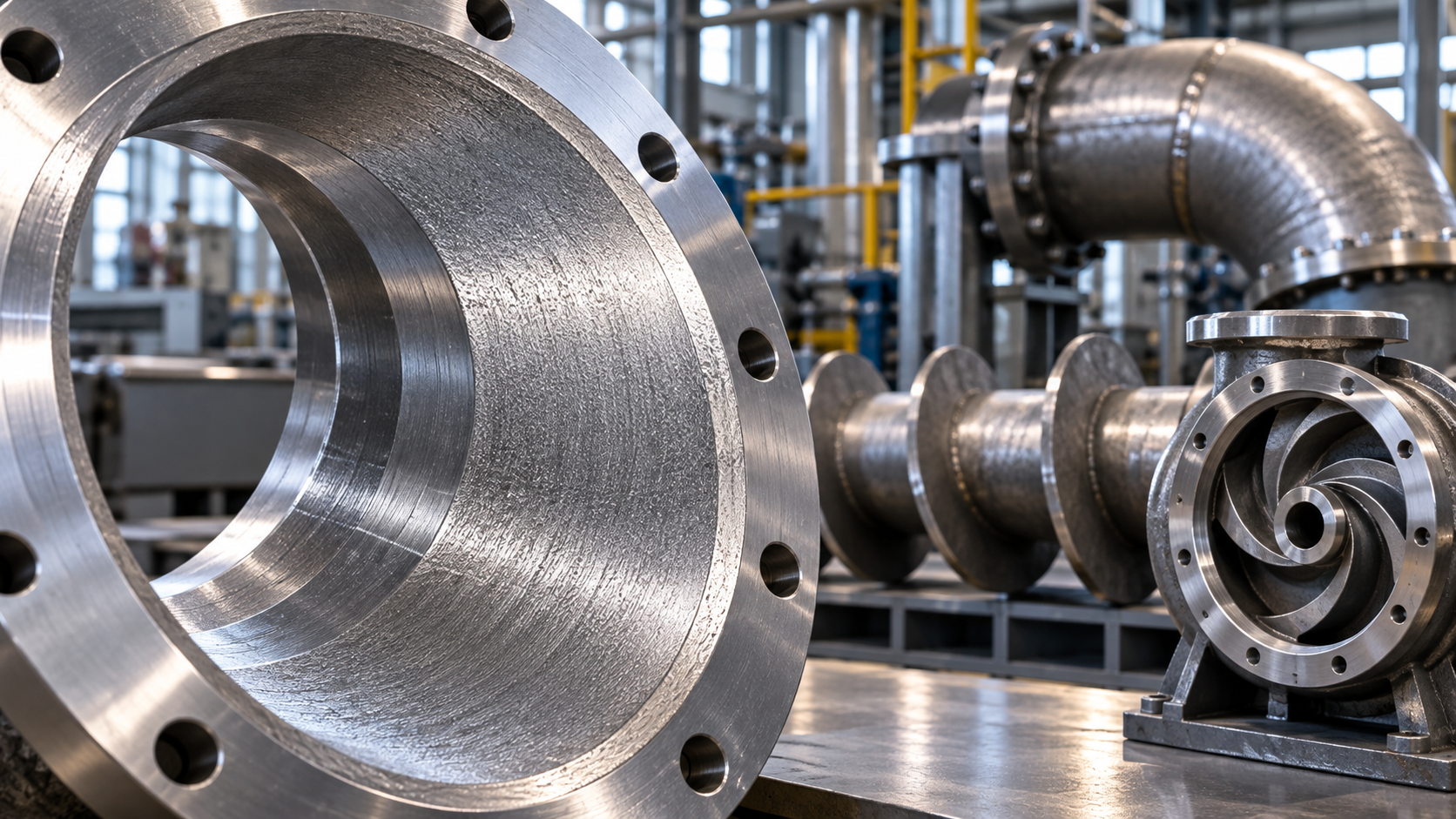
Published manufacturer applications for Stellite 720 UltraFlex include bulk material conveyance pipe, conveyance screws, refinery bends, pump casings, and valve components. The grade has also been used on catalyst withdrawal spools in fluid catalytic cracking equipment, where abrasive catalyst particles, hot gas flow, and refinery contaminants act on the same surface.
Frequently Asked Questions
Is Stellite 720 Part of the Stellite 700 Series
Yes. Stellite 703, 706, 712, and 720 are within the Stellite 700 series. The family uses cobalt, chromium, and molybdenum as its principal alloy system.
What Is the Difference Between Stellite 720 and Stellite 712
Stellite 720 has higher carbon and molybdenum and therefore a higher carbide fraction. Stellite 712 has a less carbide rich structure. The difference affects hardness, wear mechanism, edge stability, and processing behavior; published results should be compared only when product form and test conditions are similar.
Is Stellite 720 the Same as Alloy 720 or Udimet 720
No. Stellite 720 is a cobalt chromium molybdenum wear alloy. Alloy 720 and Udimet 720 commonly refer to precipitation hardening nickel base superalloys. The number 720 alone is not a complete material designation.
Can Stellite 720 Be Machined
Its 53 to 60 HRC published hardness and high carbide content make conventional machining difficult. Grinding, electrical discharge machining, or another controlled finishing method may be required, depending on geometry, allowance, and tolerance.