
Why LH₂ Sealing Surfaces Need a Different Material Strategy
Cool a valve from ambient temperature to LH₂ temperature and every component shrinks — but not at the same rate. Clearances and contact loads shift, sometimes significantly. At the same time, cryogenic fluid offers essentially no lubrication at metal-to-metal contact, so every actuation cycle is a test of a surface’s resistance to adhesive wear and seizing.
That’s the problem Stellite 6 solves. Its value in cryogenic service isn’t its familiar high-temperature performance — that’s irrelevant at -253°C. It’s the alloy’s proven resistance to galling and seizing under dry, cyclic, cryogenic contact, which is exactly why it’s become the default sealing-surface material in this space.
An Established Industry Standard, Not an Experimental Choice
Cryogenic valve manufacturer Velan’s published documentation covers liquefied gases including hydrogen, with service temperatures down to approximately -254°C, and applications spanning aerospace ground-support systems for liquid hydrogen and oxygen. Their materials guidance is direct: seats, wedges, and discs on small forged valves are often Stellite 6, specified on seating faces to prevent seizing and galling.
Published configurations spell out exactly where:
| Cryogenic Valve Configuration | Stellite 6 Application |
|---|---|
| Gate valve | Expanded seat face |
| Gate valve | Small forged wedge — solid Stellite 6 or CF8M |
| Gate valve | Welded-in seat face |
| Globe valve | Integral hardfaced seat (smaller forged valves) |
| Globe valve | Welded-in seat, hardfaced (larger cast/forged valves) |
This is a mature, standardized material strategy across the cryogenic valve industry — not a niche or experimental application.
Gate Valves: Seat Faces and Solid Wedges
Gate valve sealing depends on the wedge-to-seat contact pair, and both sides benefit from Stellite 6. Manufacturers specify it on expanded and welded-in seat faces, and — notably — offer a solid Stellite 6 wedge as a standard option on small forged cryogenic gate valves. For manufacturers with full cobalt-alloy machining capability, the solid wedge is where the real product differentiation lives: most suppliers only offer hardfacing overlays, not fully solid cobalt-alloy components.
Globe Valves: Stellite 6 at the Seat
Globe valves concentrate sealing at the disc-to-seat interface, and the cryogenic industry’s answer is consistent: integral hardfaced Stellite 6 seats on smaller forged valves, welded-in Stellite 6 hardfaced seats on larger cast or forged valves. Either format is a direct, drawing-ready product for cobalt-alloy manufacturers supplying LH₂ valve OEMs.
Structural Alloy Where You Need Strength, Stellite Where You Need Sealing
Not every component in a cryogenic valve should be cobalt alloy — and it shouldn’t be. Bodies, stems, and other structural components are best served by stainless steels selected for cryogenic toughness and corrosion resistance. Some designs pair a Stellite 6 hard sealing face with a soft sealing element for the tightest shutoff requirements. We build components around this division of labor: structural alloy carries load, Stellite 6 carries the seal.
What We Manufacture
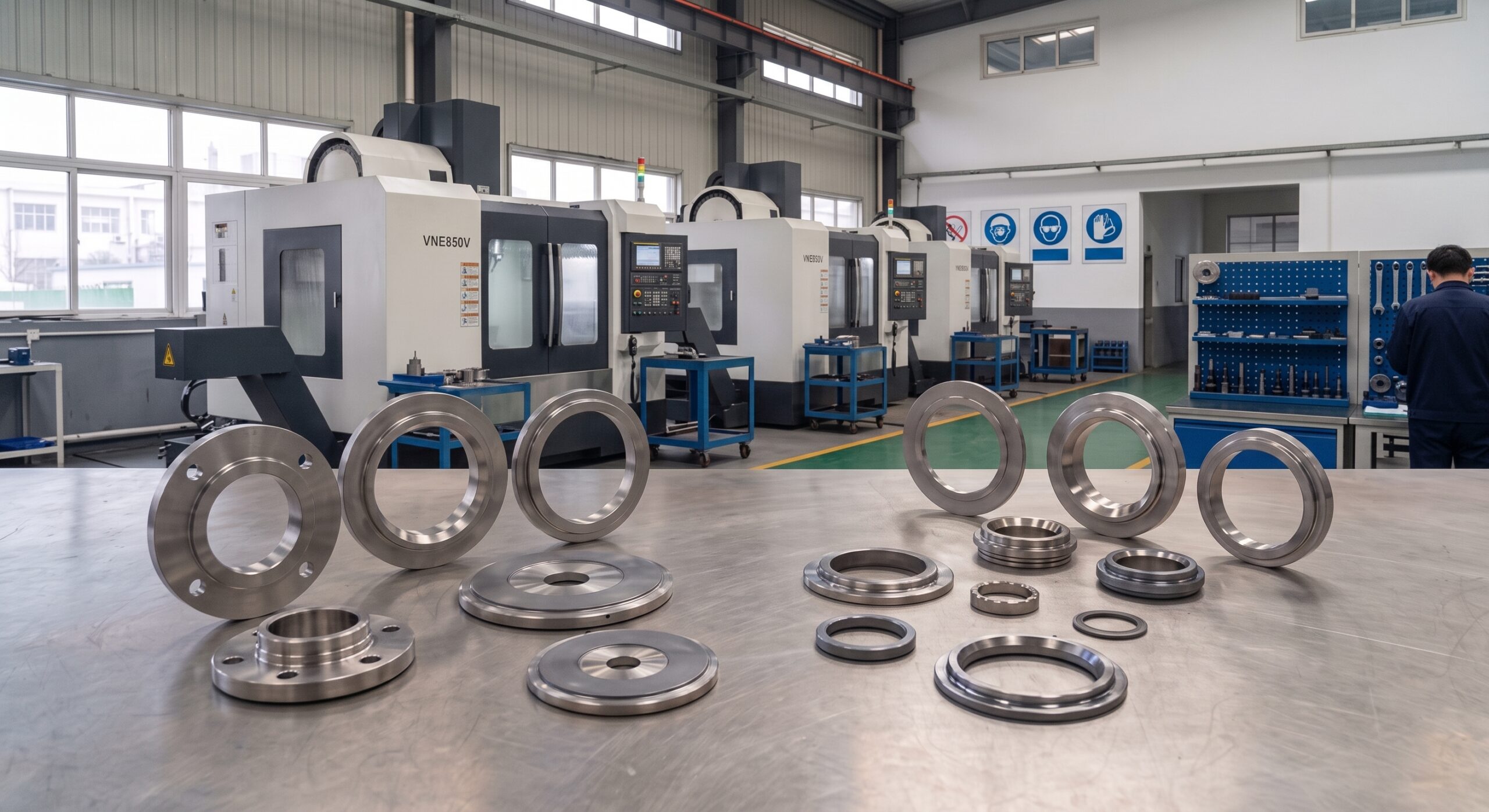
For LH₂ valve OEMs and component buyers, our cryogenic cobalt-alloy production covers:
- Stellite 6 seats and seat-face inserts for gate and globe valves
- Solid Stellite 6 wedges machined to customer drawings
- Stellite 6 disc and sealing-face components for cryogenic trim
- Full material certification and dimensional documentation for your qualification process
Send us your valve drawing and duty conditions, and our team will recommend the Stellite 6 configuration — hardfaced or solid — that fits your design.
References
- Velan, Cryogenic Valves product and engineering documentation.
- ISO 21011:2008, Cryogenic vessels — Valves for cryogenic service.
- ISO 28921-1:2022, Industrial valves — Isolating valves for low-temperature applications — Part 1.