

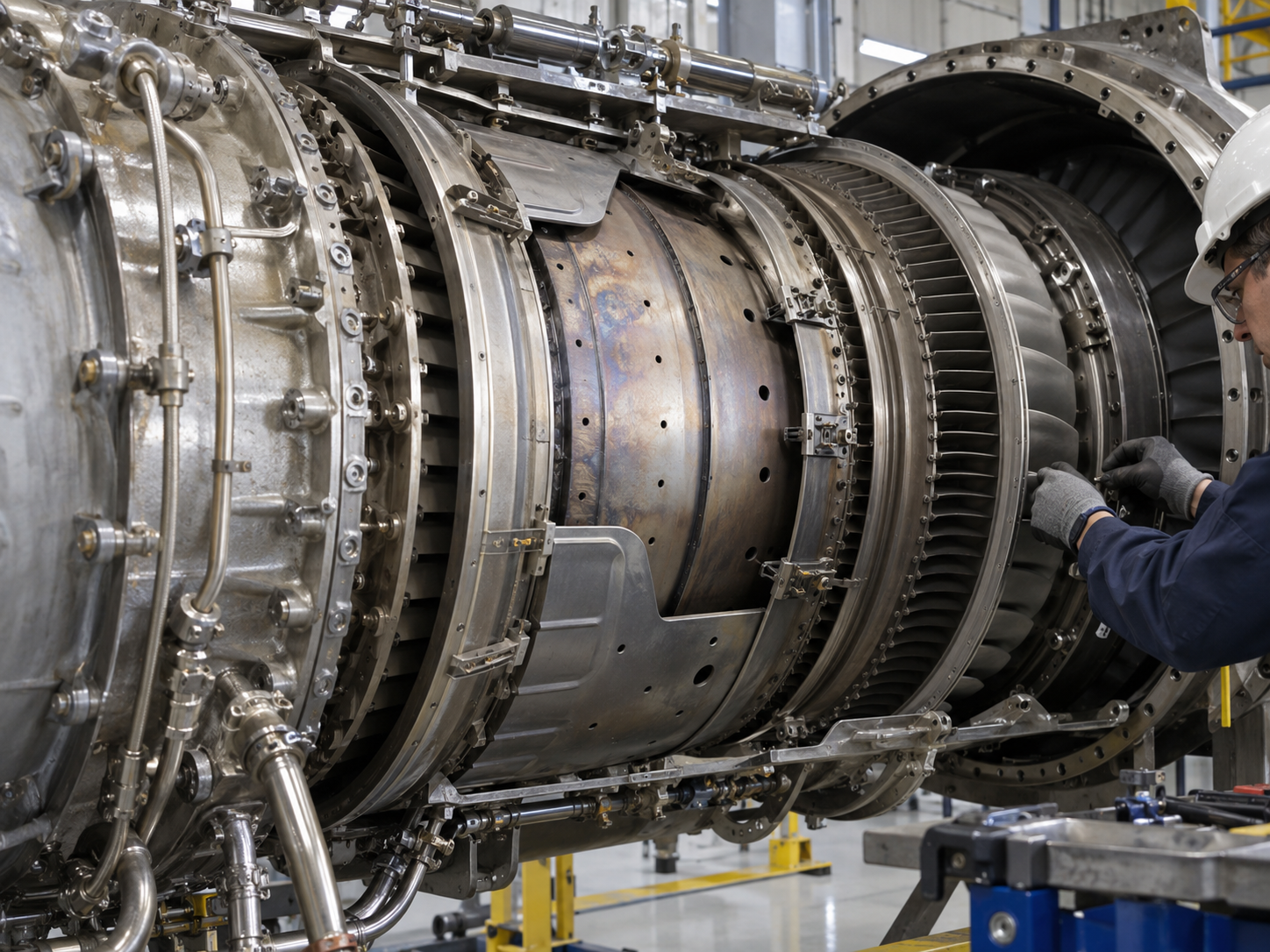
What Is Stellite 25
Stellite 25 belongs to the cobalt-base superalloy family. The cobalt matrix is strengthened mainly by chromium, tungsten, and nickel rather than by a high volume of hard carbides. This produces a different property balance from Stellite 6, Stellite 12, and Stellite 1.
| Designation | Typical meaning | Procurement use |
|---|---|---|
| Stellite 25 | Commercial or legacy cobalt-alloy designation | Confirm the producer data sheet and product form |
| Haynes 25 | Haynes International trade designation | Pair with UNS R30605 and the applicable specification |
| L605 or L-605 | Widely used industry designation for the wrought alloy | Use as an alias |
| UNS R30605 | Unified composition identifier | Use to identify chemistry; add product form and standard |
Stellite 25 Chemical Composition
The following nominal composition is published by Haynes International for Haynes 25 or UNS R30605. It describes the alloy family and should not replace the limits in the governing material specification or mill certificate.
| Element | Nominal content wt percent | Function in the alloy |
|---|---|---|
| Cobalt | Balance approximately 51 | High-temperature matrix and hot hardness |
| Chromium | 20 | Oxidation and sulfidation resistance |
| Tungsten | 15 | Strong solid-solution strengthening at high temperature |
| Nickel | 10 | Supports the wrought matrix and fabricability |
| Iron | 3 maximum | Controlled maximum |
| Manganese | 1.5 | Nominal addition |
| Carbon | 0.10 | Low carbon level limits carbide volume and supports ductility |
| Silicon | 0.4 maximum | Controlled maximum |
| Molybdenum | 1 maximum | Controlled maximum |
How the Composition Controls Performance
Tungsten strengthens the cobalt-rich matrix without requiring the high carbon content used in harder cast wear alloys. Chromium supports protective scale formation in oxidizing and sulfidizing environments. Nickel helps maintain the wrought alloy balance and contributes to its ability to be formed and welded.
The low nominal carbon content is a defining feature. Solution-treated Stellite 25 is much less hard than carbide-rich Stellite grades, but it offers substantially more ductility and can be strengthened by cold work. This is why L605 is often selected for fabricated high-temperature parts and bearings rather than cutting edges or severe abrasive service.
Typical Physical and Mechanical Properties
| Property | Published typical value | Condition or limitation |
|---|---|---|
| Density | 9.07 g/cm3 | Room temperature |
| Melting range | 1330 to 1410 degrees C | Published physical property range |
| Solution-treated hardness | About 22 HRC or 97 to 99 HRBW | Varies by test method and product form |
| Room-temperature yield strength | About 474 to 505 MPa | Typical solution-annealed plate sheet and bar data |
| Room-temperature tensile strength | About 996 to 1015 MPa | Typical solution-annealed plate sheet and bar data |
| Room-temperature elongation | About 55 to 60 percent | Typical solution-annealed plate sheet and bar data |
| Long-term oxidation guideline | Up to about 980 degrees C | For prolonged exposure in air or combustion gas |
| Final solution heat treatment | 1175 to 1230 degrees C then rapid cooling | Time depends on section thickness |
Important: these are typical published values, not guaranteed acceptance limits. Actual requirements must come from the specified product form, heat-treatment condition, standard revision, and certified test report.
Key Properties of Stellite 25
High Temperature Strength
Stellite 25 retains useful tensile and creep strength at temperatures where many conventional steels lose load-carrying capability. Haynes identifies the alloy as particularly effective for long-term service from approximately 650 to 980 degrees Celsius. Component design must still account for stress, section thickness, atmosphere, thermal cycling, and required life.
Oxidation and Sulfidation Resistance
The chromium-bearing cobalt matrix provides good resistance to air and combustion-gas oxidation, with published guidance for prolonged exposure up to about 980 degrees Celsius. The alloy also has good resistance to sulfidation. Above this range, newer high-temperature alloys may provide better oxidation performance.
Galling Cavitation and Bearing Performance
Haynes reports excellent resistance to metal-to-metal galling and cavitation compared with many engineering alloys. This has supported the use of Alloy 25 for bearing balls and races. Wear performance still depends on contact pressure, counterface material, lubrication, surface finish, temperature, and motion.
Cold Work Response
Cold work can raise the strength and hardness of L605 substantially. Published data show solution-treated material near 22 to 24 HRC, while increasing cold reduction can raise room-temperature hardness into the 30 to 40 HRC range. The exact result depends on product thickness, reduction, aging, and subsequent annealing.
Typical Stellite 25 Applications
- Gas-turbine and hot-gas components that require high-temperature strength and oxidation resistance
- Combustor parts, rings, seals, and other fabricated aerospace or industrial hot-section components
- Bearing balls, races, and metal-contact parts where galling resistance is important
- High-temperature fixtures, springs, diaphragms, and formed components that need strength with useful ductility
Stellite 25 Compared with Common Wear Grades
| Grade | Strengthening approach | Typical advantage | Main selection caution |
|---|---|---|---|
| Stellite 25 or L605 | Solid-solution strengthened low-carbon wrought alloy | High-temperature strength, ductility, oxidation and galling resistance | Not the hardest option for severe abrasion |
| Stellite 6 | Moderate carbide fraction | Balanced wear, corrosion and toughness | Product form and manufacturing route strongly affect properties |
| Stellite 12 | Higher carbide fraction | Greater hardness and abrasion resistance | Lower toughness and fabricability than Stellite 25 |
| Stellite 21 | Low-carbon cobalt chromium molybdenum alloy | Toughness, corrosion resistance and thermal-shock resistance | Lower hardness than carbide-rich grades |
Choose Stellite 25 when elevated-temperature strength and fabricability are more important than maximum room-temperature hardness.
Frequently Asked Questions
Is Stellite 25 the Same as L605
Stellite 25 is often used as an alternate or legacy name for the L605 or UNS R30605 alloy family.
Is Haynes 25 the Same as L605
Yes in common wrought-alloy usage. Haynes 25 and L605 identify UNS R30605.
What Does Haynes Stellite Mean
Haynes Stellite is an imprecise search phrase and may reflect historical company naming or a buyer combining trade names. It is not a specification. Use the intended grade, UNS number, product form, and standard on the purchase order.
How Hard Is Stellite 25
Published Haynes data show solution-treated material at about 22 HRC, while cold work can raise hardness into the 30 to 40 HRC range.
Request a Stellite 25 or L605 Quote
Send an inquiry using the form on this page, email sales@stecometals.com, or contact WhatsApp +86 136 7477 1335 for the fastest response. Include the drawing, product form, alloy designation, specification, dimensions, quantity, service conditions, and certification requirements. We normally respond within 24 hours after receiving enough technical information to review the request.
