
Choosing the wrong material causes premature failure and costly downtime. It’s frustrating to replace parts constantly. Understanding the key differences between these alloys ensures you make the right choice.
Stellite 6 is a cobalt-based alloy excelling in severe wear, galling, and high-temperature resistance, making it ideal for protective surfaces. In contrast, 17-4PH is a high-strength precipitation-hardening stainless steel, best suited for structural components that require good mechanical strength and general corrosion resistance.
These two high-performance materials often come up in discussions about demanding industrial applications. On the surface, both offer good corrosion resistance, which can be confusing. However, their fundamental purpose and performance characteristics are worlds apart. One is designed for structural integrity, while the other is built to protect surfaces in the harshest conditions. Let’s dig into the details to understand how to select the correct material for your specific need. This knowledge will save you time, money, and operational headaches in the long run.
What are the Core Differences in Material Composition and Properties?
Material data sheets can look like just a list of numbers. Picking a material based on a single metric, like hardness, can lead to a costly design failure. Let’s break down what their chemical makeup means for real-world performance.
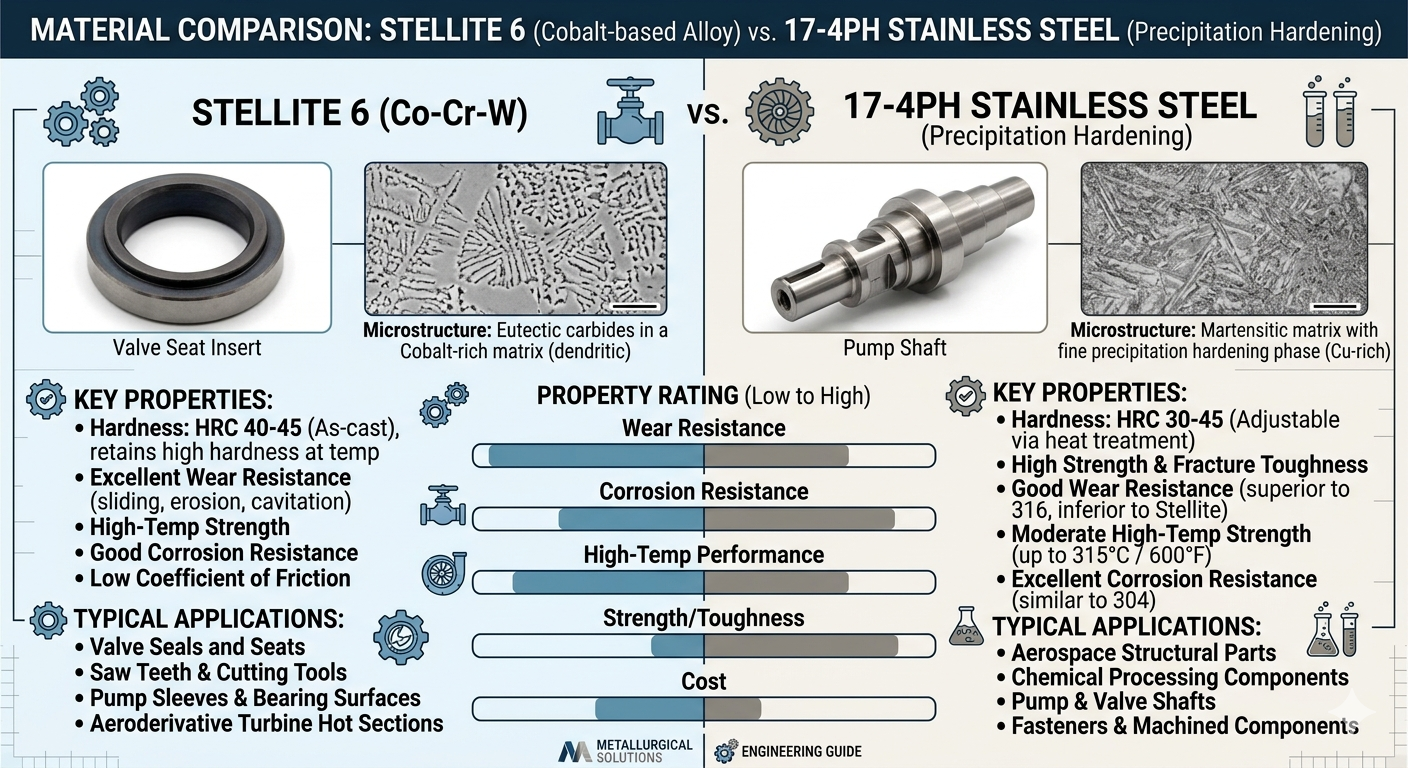
The primary difference lies in their base metal and alloying philosophy. Stellite 6 is a cobalt-chromium-tungsten alloy designed specifically for surface durability. 17-4PH is an iron-based chromium-nickel-copper stainless steel engineered for high mechanical strength through heat treatment. Their core compositions define their roles.
Understanding the Alloying Elements
The elements in an alloy are not there by accident; each one serves a critical function. In my work, I see how these recipes directly impact a component’s survival in the field. Stellite 6 is built on a cobalt base. Cobalt gives it excellent “hot hardness” and a low friction coefficient. The addition of chromium provides corrosion resistance and forms hard chromium carbides. Tungsten is the key player for high-temperature strength and wear resistance, forming very hard tungsten carbides. In contrast, 17-4PH is mostly iron. Its properties come from a careful balance of other elements. Chromium provides its “stainless” quality, while nickel improves toughness. The secret ingredient is copper, which allows the material to be precipitation hardened. This heat treatment process creates very fine particles within the steel’s structure, dramatically increasing its strength and hardness.
Mechanical Strength vs. Surface Properties
This leads to the most important distinction. 17-4PH is all about bulk mechanical properties. We specify it when we need high tensile and yield strength for a part that has to carry a load, like a shaft or a fastener. Its hardness is uniform throughout the part. Stellite 6, on the other hand, is designed for superior surface properties. Its value is not in its tensile strength but in its ability to resist being worn away. The hard carbide particles distributed throughout the tough cobalt matrix create a surface that withstands abrasion, erosion, and metal-to-metal galling. This is why we often use it as a hardfacing overlay on a stronger, less expensive base material. It’s a protective shield, not a structural beam.
| Property Focus | Stellite 6 | 17-4PH Stainless Steel |
|---|---|---|
| Primary Goal | Surface Durability | Structural Strength |
| Key Property | Wear & Hot Hardness | Tensile & Yield Strength |
| Microstructure | Cobalt matrix with hard carbides | Hardened martensitic structure |
| Typical Use | Surface coating, wear inserts | Load-bearing components |
How Do They Perform in High-Wear and High-Temperature Environments?
Your components wear out too quickly in harsh production environments. The constant need for replacement is expensive and disrupts operations. Let’s compare their performance in these critical conditions to find a reliable solution.
Stellite 6 is the clear winner in hot and abrasive environments. It was specifically designed to maintain its hardness and wear resistance at high temperatures. 17-4PH stainless steel, while strong at room temperature, softens significantly as temperatures rise, limiting its use in demanding thermal applications.
Wear Resistance Mechanisms
When I talk to engineers about wear, I always bring up galling. Galling is a severe form of wear where two metals in sliding contact weld together and then tear apart, destroying the surface. Stellite 6 has an inherently low coefficient of friction and is extremely resistant to galling, especially against itself or other metals. This makes it a top choice for valve seats and seal rings that experience high-pressure sliding contact. The hard carbides in its structure act as the primary defense against abrasive particles. 17-4PH has fair abrasive wear resistance for steel, but it is very prone to galling when sliding against another stainless steel. It is not designed for applications where sliding wear is the main problem, particularly without good lubrication. Its purpose is to resist being bent or broken, not to resist being scraped away.
High-Temperature Performance (Hot Hardness)
This is where the difference becomes dramatic. The strength of 17-4PH comes from its heat treatment, typically in conditions like H900 or H1150. However, if you expose it to temperatures above about 315°C (600°F), its carefully engineered microstructure begins to change, and it loses its strength and hardness rapidly. This process, called over-aging, is irreversible. Stellite 6, however, was born for the heat. Its cobalt-chromium matrix is exceptionally stable at high temperatures. It retains a high percentage of its room-temperature hardness even up to 600°C (1112°F) and beyond. This property, known as “hot hardness,” is critical for parts like extrusion dies, engine valves, and hot-shear blades that must stay hard and sharp while working at red-hot temperatures.
What About Corrosion Resistance and Overall Cost-Effectiveness?
You need a component that resists both wear and corrosive attack. At the same time, budget is always a major factor in any project. Let’s look at how to balance long-term performance with the total cost.
Both alloys offer good corrosion resistance in many environments. Stellite 6, however, provides far superior protection against combined erosion-corrosion and cavitation. From a cost perspective, 17-4PH is significantly cheaper and easier to machine, making it more cost-effective for structural components not exposed to severe wear.
Corrosion Resistance in Context
17-4PH provides excellent general corrosion resistance, comparable to the widely used 304 stainless steel. It holds up well against atmospheric corrosion and in many mild industrial fluids. It’s a reliable choice for general-purpose applications. Stellite 6 also has excellent corrosion resistance due to its high chromium content, performing well in oxidizing acids and other chemical environments. Its true advantage, however, is revealed in more complex situations. In a process fluid containing abrasive particles, the fluid flow can strip away the protective passive layer on stainless steel, allowing corrosion and erosion to attack the metal simultaneously. This is called erosion-corrosion. Stellite 6’s intrinsic hardness and wear resistance protect it from this dual attack, making it last much longer in pumps, valves, and mixers handling slurries.
A Look at Total Cost of Ownership
Looking only at the initial price of a part can be misleading. As a sourcing manager, I always encourage my clients to think about the total cost over the component’s life. 17-4PH has a lower raw material cost and is much easier to machine, resulting in a lower initial purchase price. For many applications, this is the right economic choice. Stellite 6 is an expensive material, and it is notoriously difficult to machine, which drives up manufacturing costs. However, in a severe wear application where a 17-4PH part might last only months, a Stellite 6 component could last for years. The savings from reduced downtime, fewer change-outs, and less maintenance labor often make Stellite 6 the cheaper option in the long run.
| Feature | Stellite 6 | 17-4PH Stainless Steel |
|---|---|---|
| Raw Material Cost | High | Moderate |
| Machinability | Difficult | Good |
| Manufacturing Cost | High | Low |
| Service Life (Wear Apps) | Very Long | Short to Medium |
| Total Cost of Ownership | Lower in severe service | Lower in structural apps |
How Should I Choose Between Stellite 6 and 17-4PH for My Application?
You have all the data, but you might still feel unsure about which material to pick. Making the wrong choice can be a costly and time-consuming mistake. Here is a simple guide to help you decide.
Choose 17-4PH stainless steel for high-strength structural parts like shafts, fasteners, and supports that need good general corrosion resistance. Select Stellite 6 for critical components facing severe wear, galling, corrosion, and high temperatures, such as valve trim, bearing sleeves, and cutting edges.
When to Specify 17-4PH
I recommend 17-4PH when the primary requirement is mechanical strength. If you need a part to withstand high stress or pressure without bending or breaking, this is an excellent choice. Its good corrosion resistance is a great bonus. Common applications include pump shafts, valve stems, aircraft landing gear components, and high-strength fasteners. The key decision factors are simple: is high tensile strength the most critical property? Is the operating temperature consistently below 315°C (600°F)? Is the environment only mildly corrosive? And is the initial purchase cost a primary driver? If the answers are yes, then 17-4PH is likely your best bet. It provides a fantastic combination of strength, corrosion resistance, and value for structural roles.
When to Specify Stellite 6
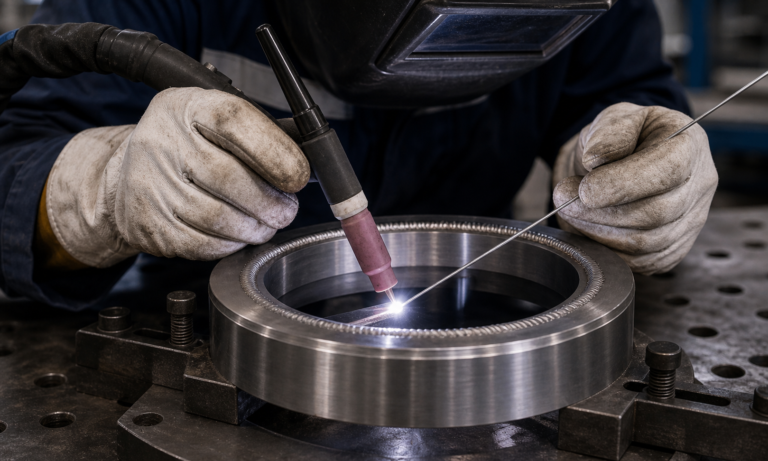
I advise my clients to use Stellite 6 when the main cause of failure is surface degradation, not fracture. If your parts are being destroyed by abrasion, erosion, metal-to-metal galling, or a combination of wear and corrosion, Stellite 6 is the solution. It is the go-to material for valve seats and plugs in severe service, pump sleeves in slurry applications, bushings that run without lubrication, and scraper blades that must stay sharp. The key questions to ask are: is wear the primary failure mode? Are operating temperatures high? Is galling a known issue? Is long-term reliability more important than the initial component cost? If you answer yes to these, you need the superior surface protection of Stellite 6. Often, the most economical solution is to apply Stellite 6 as a weld overlay onto a tougher, cheaper base metal, getting the best of both worlds.
Conclusion
Stellite 6 and 17-4PH are premier materials, but they are engineered for very different tasks. Understanding their strengths in wear protection versus structural integrity is crucial for selecting the right alloy.