
Struggling with wear on your critical parts? Choosing the wrong welding material often leads to costly failures and frustrating downtime. Let’s fix that.
Stellite welding consumables are special cobalt-chromium alloys used for hardfacing to protect against wear, heat, and corrosion. Selecting the right grade, such as ERCoCr-A for impact or ERCoCr-C for abrasion, is the key to extending component life in demanding industrial environments.
I’ve been in this business for a long time, and I’ve seen it all. I once had a client, a procurement manager for a large pump manufacturer, who was frustrated with how quickly their pump impellers were wearing out. They were using a standard stainless steel overlay, which just wasn’t holding up. After a short call, we identified the right Stellite grade for their specific problem. The result? Their impeller service life more than tripled. This is the power of choosing the right material. It’s not just about buying a product; it’s about solving a problem. Let’s walk through this process together so you can get the same results.
What Are the Different Types of Stellite Welding Consumables?
Confused by terms like electrodes, wires, and rods? Using the wrong form for your welding process can cause major headaches and poor results.
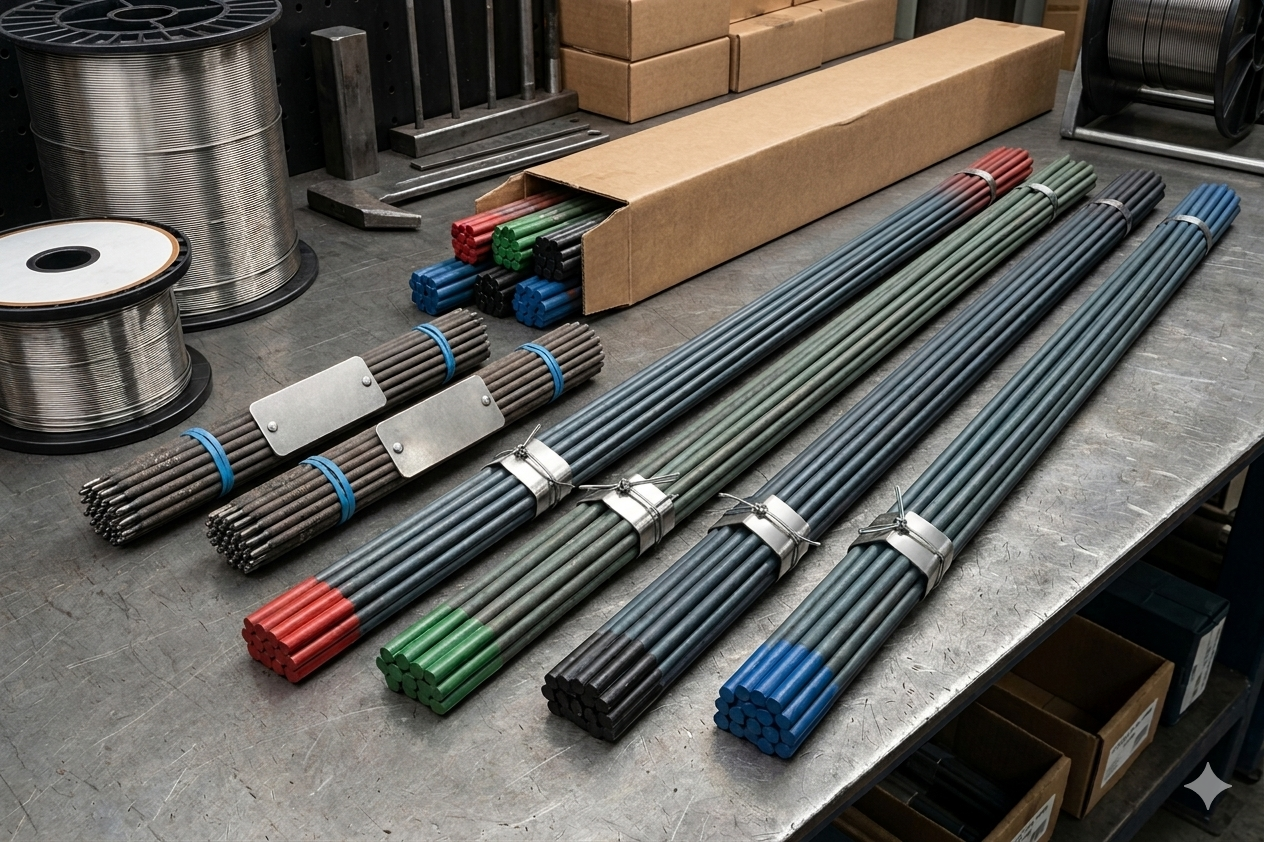
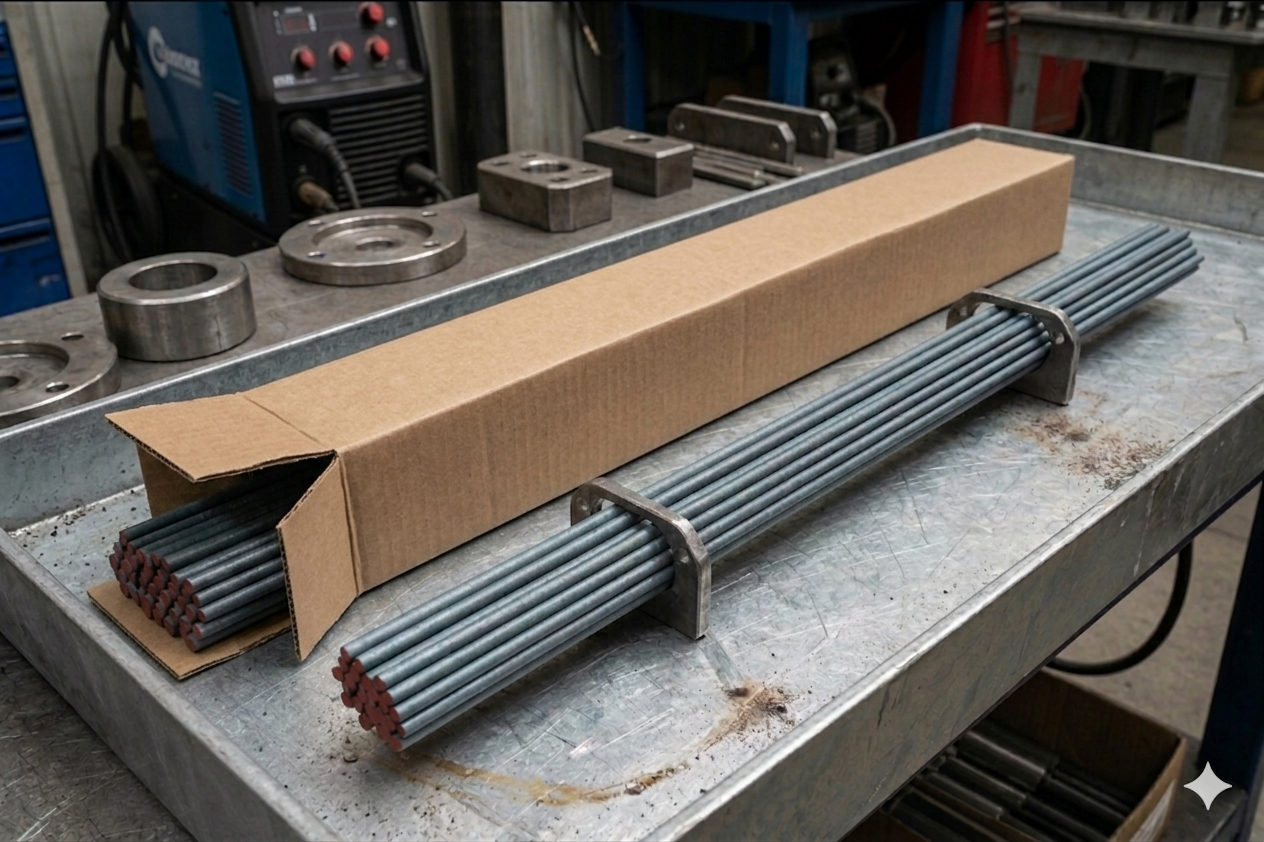
The main types are welding electrodes (coated for SMAW), welding wires (spooled for MIG/TIG), and bare rods (for TIG/oxy-acetylene). Each is designed for a specific welding process, ensuring a quality weld deposit for your application.
Choosing the right format is just as important as choosing the right alloy grade. It depends entirely on your workshop’s capabilities and the specific job at hand. I remember a project for a large power generation client. They needed to hardface dozens of valve seats quickly. Initially, they planned to use bare TIG rods, but the process was too slow. We switched them to a spooled Stellite wire for their automated TIG setup. This simple change dramatically increased their productivity and kept their project on schedule. Let’s break down the types so you can make the best choice for your team.
Welding Electrodes (Coated Rods)
These are what most people picture when they think of “stick welding.” A Stellite core wire is coated with a flux material. This flux creates a shielding gas when burned, protecting the molten weld pool from the atmosphere. It’s used in a process called Shielded Metal Arc Welding (SMAW). These electrodes are great for on-site repairs and maintenance work because you don’t need a separate shielding gas tank. They are versatile and can be used in various positions.
Welding Wires (Spooled)
Stellite welding wire comes on a spool and is fed continuously through the welding gun. It is used in automated or semi-automated processes like MIG (GMAW) or automated TIG welding. This method allows for much faster welding and higher deposition rates compared to stick welding. It’s ideal for large-scale production, surfacing large areas, or when you need consistent, repeatable welds. You will need a shielding gas, typically argon, to protect the weld.
Bare Rods (Cut Lengths)
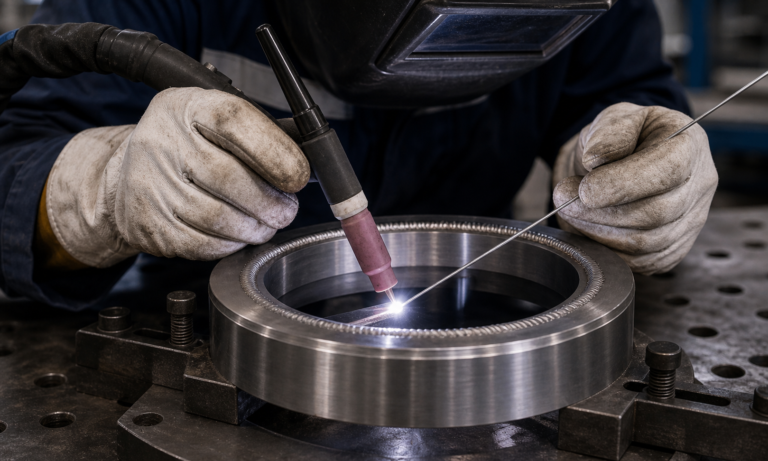
These are straight, uncoated rods of Stellite alloy. They are used for manual TIG (GTAW) or oxy-acetylene welding. TIG welding with a bare rod gives the welder the most control over the weld puddle. This precision is perfect for delicate work, thin materials, or building up sharp edges on tools. It produces a very clean and high-quality weld, but it is a slower, more skill-intensive process.
| Consumable Type | Welding Process | Common Use Case | Key Advantage |
|---|---|---|---|
| Welding Electrode | SMAW (Stick) | Field repairs, all-position welding | Portability, no external gas needed |
| Welding Wire | MIG/Automated TIG | Large surfaces, production runs | High speed and deposition rate |
| Bare Rod | Manual TIG, Oxy-Acetylene | Detailed work, thin edges, high-quality finish | Maximum control and precision |
Which Stellite Grade Is Best for Wear and Impact Resistance?
Your components face both impact and abrasion. Choosing a grade that only handles one leads to premature failure and costly replacement.
Stellite 6 (ERCoCr-A) is the industry workhorse, offering a great balance of wear resistance and impact toughness. It’s the go-to solution for a wide range of applications, from valve seats to industrial knives.
When customers call me and aren’t sure where to start, I almost always begin the conversation with Stellite 6. It’s the most popular and versatile of the cobalt alloys for a reason. But sometimes, an application needs something a bit different. For example, if wear resistance is more critical than impact, we might look at Stellite 12. Understanding the trade-offs between hardness and toughness is the key to selecting the perfect material for long-term performance. Let’s look at these two popular grades more closely.
Stellite 6 (ERCoCr-A): The All-Rounder
Stellite 6 is the jack-of-all-trades in the hardfacing world, and it masters them all quite well. Its chemical composition creates a microstructure that gives it a fantastic combination of properties. It resists metal-on-metal wear, it stands up to corrosion, and it can handle a good amount of impact without chipping or cracking. A huge benefit is that after welding, it’s still possible to machine it with carbide tools, which gives you flexibility in finishing. I’ve supplied Stellite 6 for everything from hot-dip galvanizing line components to saw tips for the timber industry. Its reliability and balanced performance make it our most requested grade for both OEM manufacturers and repair workshops.
Stellite 12 (ERCoCr-B): The Harder Sibling
Think of Stellite 12 as Stellite 6’s tougher older brother. It contains more tungsten and carbon, which makes its microstructure denser and harder. This increase in hardness gives it superior resistance to abrasion and sliding wear compared to Stellite 6. The trade-off is a slight reduction in ductility and impact resistance. You wouldn’t want to use it in an application with heavy shocks. I recommend Stellite 12 for components like bearings, high-pressure pump sleeves, and the flights on extrusion screws where abrasive particles are a constant problem, but heavy impact is not the primary concern.
| Attribute | Stellite 6 (ERCoCr-A) | Stellite 12 (ERCoCr-B) |
|---|---|---|
| Key Property | Balanced wear and toughness | Higher abrasion resistance |
| Hardness (HRC) | ~40 | ~48 |
| Impact Resistance | Good | Moderate |
| Common Uses | Valve seats, pump shafts, knives | Bearings, extrusion screws, sleeves |
What Should I Use for Extreme Abrasion or High Temperatures?
Facing extreme abrasive wear or intense heat? Standard hardfacing materials just don’t last, causing constant downtime for repairs on your critical machinery.
For severe abrasion, Stellite 1 (ERCoCr-C) is the top choice. For high-temperature applications, Stellite 21 (ERCoCr-E) provides excellent thermal shock resistance and corrosion resistance, retaining its strength when things get hot.
Sometimes, “good” isn’t good enough. You have those killer applications that eat components for breakfast. I worked with a mining company that was replacing the blades on their mixers almost weekly due to extreme abrasion from sand and rock. We switched them to Stellite 1, and their replacement cycle went from weeks to months. In another case, a chemical plant had valve components failing from a combination of high heat and corrosive media. Stellite 21 was the answer, providing the stability they needed at operating temperature.
Stellite 1 (ERCoCr-C): The Abrasion Fighter
When your primary enemy is severe abrasive wear, you bring in the heavy artillery: Stellite 1. This grade has the highest content of tungsten and carbon among the common Stellite alloys. This chemistry forms a large volume of hard carbides in the cobalt matrix, making it incredibly hard and resistant to scratching and gouging from hard particles.
Stellite 21 (ERCoCr-E): The High-Temp Champion
Stellite 21 is different from the others. It gets its properties from molybdenum instead of tungsten and has a lower carbon content. This makes it less hard at room temperature but gives it exceptional properties at high temperatures. It has excellent resistance to thermal shock, retains its hardness well at elevated temperatures, and has great resistance to corrosion and oxidation.
How Do I Properly Apply Stellite Welding Consumables?
You have the right Stellite rod, but a poor weld means it won’t perform. Incorrect application can lead to cracks and failure before it even enters service.
Proper application involves preheating the base material, maintaining clean surfaces and correct welding parameters, and allowing for slow, controlled cooling. This prevents cracking and ensures a strong, uniform hardface deposit for maximum performance.
This is the step that separates success from failure. I can’t tell you how many times a customer has called me about a “defective” product, only to find out they skipped a critical step in the welding procedure.
Pre-heating is Not Optional
The base metal and the Stellite alloy expand and contract at different rates. If you weld a hot Stellite deposit onto a cold piece of steel, the stress created during cooling will almost certainly cause cracks. Pre-heating the part to between 300°C and 500°C helps minimize this difference.
Welding Process Tips
Cleanliness is critical. Make sure the area to be welded is free of oil, rust, and any other contaminants. When welding, your goal is to minimize dilution, which is the mixing of the Stellite with the base metal.
Post-Weld Slow Cooling
Once you’re done welding, you can’t just let the part cool in the open air. The best practice is to immediately cover the hot component with an insulating blanket or bury it in a dry, heat-resistant material like vermiculite or sand.
Conclusion
Choosing the right Stellite grade and using proper welding techniques ensures maximum component life, reduces downtime, and lowers your long-term operating costs.