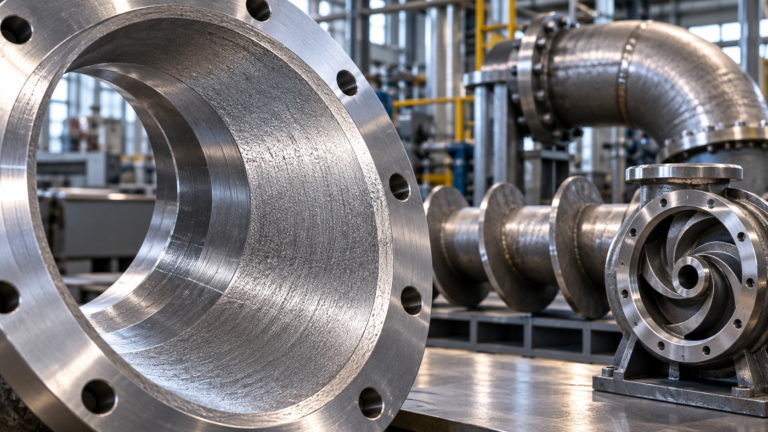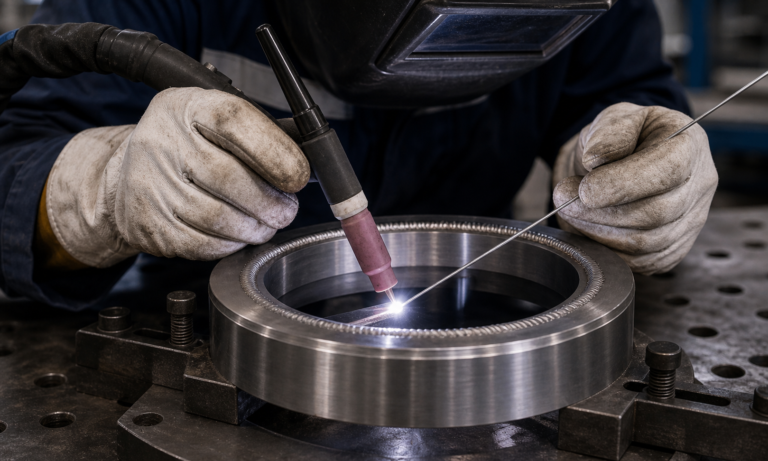

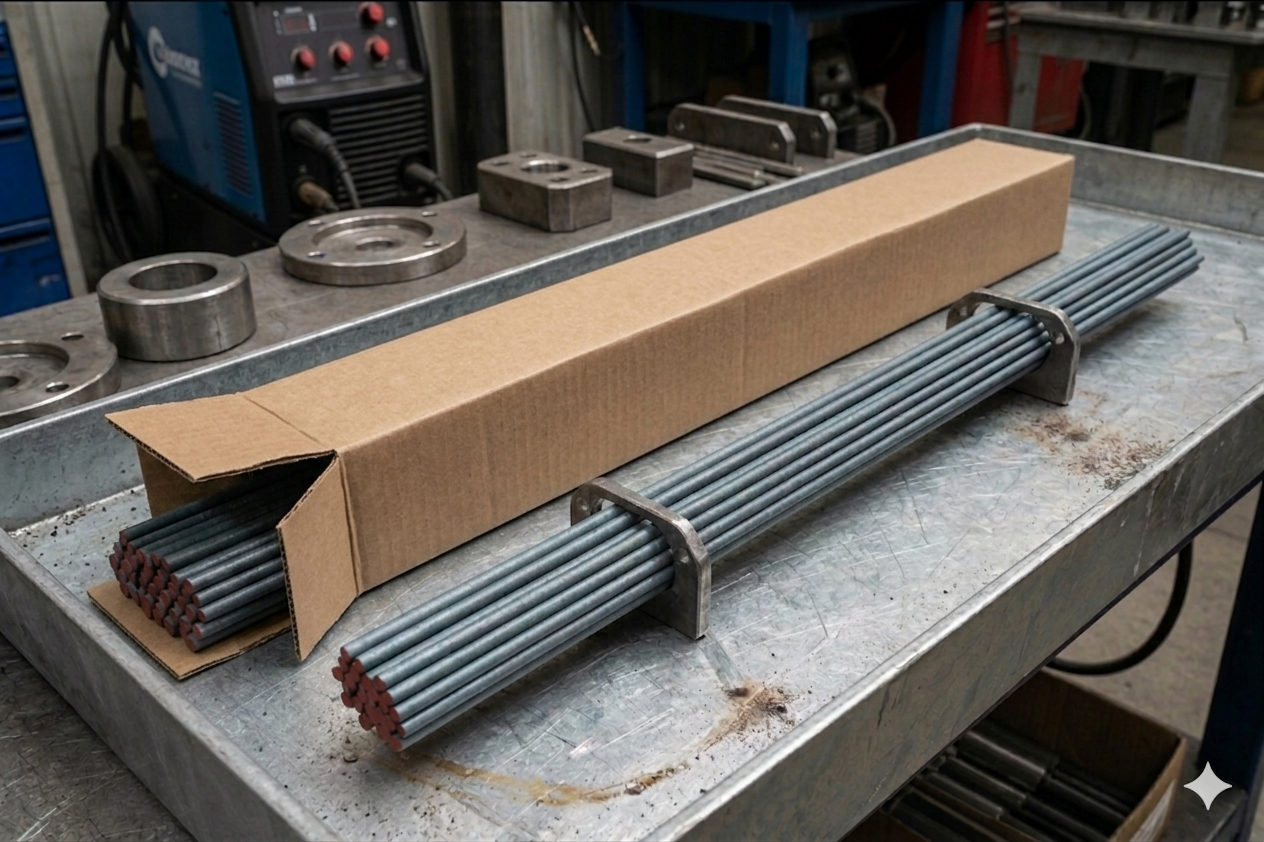
Struggling to choose between ERCoCr-A and ERCoCr-B welding rods? This decision seems simple, but the wrong choice can lead to costly and premature equipment failure. Let me help you.
The best choice between Stellite 6 (ERCoCr-A) and Stellite 12 (ERCoCr-B) depends entirely on your specific application’s wear mechanism. Stellite 6 is better for balanced performance against impact and corrosion, while Stellite 12 excels in pure abrasion resistance and edge retention.
When I first started in this business, I thought a harder material was always a better material. It took seeing some very expensive, very hard components fail spectacularly to learn that this is not true. The real key to solving wear problems is to understand the problem first, then choose the tool. These two alloys are perfect examples of different tools for different jobs. Let’s dig into what makes them different and how to choose the right one for your project.
What Are ERCoCr-A and ERCoCr-B?
Are you confused by the AWS classifications like ERCoCr-A? These codes can seem technical, but understanding them gives you a real advantage in selecting the right material. Let me clarify.
ERCoCr-A and ERCoCr-B are codes from the American Welding Society (AWS). ERCoCr-A is the designation for Stellite 6 welding consumables, and ERCoCr-B is for Stellite 12. They are both cobalt-based hardfacing alloys designed to protect parts from wear.
These designations are incredibly helpful. The “E” stands for electrode or “R” for rod, meaning it can be used in various welding processes. “CoCr” tells you the primary chemistry is cobalt and chromium. The final letter (A or B) differentiates specific grades within that family. In everyday shop talk, most people will just say “Stellite 6” or “Stellite 12.” These materials are most commonly supplied as bare cast welding rods for TIG welding, powders for PTA or laser cladding, and sometimes as flux-cored wires. They are not structural materials. You don’t build a bridge out of them. Instead, you apply a thin layer of them onto a less expensive, tougher base metal, like stainless steel or carbon steel. This process, called hardfacing, gives you the best of both worlds: the strength of the base material and the superior wear resistance of the Stellite alloy right where you need it.
What Is the Chemical Composition Difference?
Do the small details in a chemical composition report really matter? Absolutely. They are the entire reason these two alloys perform so differently. Understanding them helps you make better choices.
Stellite 12 (ERCoCr-B) contains significantly more tungsten and carbon than Stellite 6 (ERCoCr-A). This recipe creates more hard carbide particles, making Stellite 12 harder and more abrasion-resistant but also less ductile.
Let’s break this down. Both are cobalt-chromium-tungsten alloys, but the devil is in the details. The cobalt provides a tough, corrosion-resistant, and inherently galling-resistant matrix. The chromium adds to the corrosion resistance. The magic happens with the tungsten and carbon. These two elements combine to form extremely hard particles called tungsten carbides within the softer cobalt matrix. Think of it like concrete: the cobalt is the cement, and the carbides are the hard stones (aggregate).
| Element | Stellite 6 (ERCoCr-A) | Stellite 12 (ERCoCr-B) |
|---|---|---|
| Carbon (C) | ~1.2% | ~1.6% |
| Tungsten (W) | ~4.5% | ~8.3% |
| Chromium (Cr) | ~29% | ~29% |
| Cobalt (Co) | Balance | Balance |
As you can see in the table, Stellite 12 has more carbon and almost double the tungsten. This means it forms a much higher volume of those hard carbide “stones.” This is what gives it higher bulk hardness (around 48 HRC) compared to Stellite 6 (around 40 HRC) and makes it a champion against sliding abrasion. However, more stones and less cement means the overall material is more brittle. Stellite 6 has fewer carbides, which means its properties are more influenced by the tougher, more ductile cobalt matrix.
Why Is Hardness Not Everything?
Do you automatically ask for the material with the highest hardness number? This is a very common mistake. It can lead to parts that fail even faster than the ones you’re replacing.
Focusing only on hardness ignores other critical failure modes like cracking from impact, chipping under stress, and thermal fatigue. The most durable material has a balance of properties, not just maximum hardness.
I once had a customer who insisted on using the hardest material available for a hot-stamping die. The die had a Rockwell hardness in the high 60s. It failed on the first day. It didn’t wear out; it cracked completely in half. The thermal shock from the hot part and the stamping force was too much for the brittle material to handle. They replaced it with a tougher, slightly softer material, and that die lasted for months. This is a perfect lesson. Hardness is a measure of resistance to scratching or indentation. But what if the problem isn’t scratching? What if the part is failing because of impact, sudden temperature changes, or high clamping forces? An extremely hard material is often brittle. It has no “give.” When stressed, instead of deforming slightly, it just cracks. True toughness is the ability to absorb energy and resist fracture. For many applications, toughness is far more important than a few extra points on the Rockwell scale.
Why Does Stellite 6 Dominate Valve Applications?
Have you ever wondered why Stellite 6 is practically the industry standard for valve seats? It is not an accident or just tradition. There are very specific, technical reasons for its dominance.
Stellite 6 offers the best all-around, balanced performance for the complex environment inside a valve. It resists galling, corrosion, cavitation, and thermal fatigue, which are more critical than pure hardness for ensuring a long-lasting seal.
Think about what happens to a valve’s sealing surfaces. They don’t just wear down smoothly. Failure is a complex mix of problems.
- Galling: When two metal surfaces slide under high pressure, they can weld themselves together and then rip apart. The cobalt matrix of Stellite 6 is naturally resistant to this.
- Corrosion: The high chromium content gives it excellent resistance to rust and chemical attack.
- Thermal Fatigue: Rapid heating and cooling can cause micro-cracks in brittle materials. Stellite 6’s toughness helps it survive these thermal cycles without cracking.
- Cavitation & Erosion: High-velocity fluid flow and collapsing vapor bubbles can hammer the surface. Stellite 6 is tough enough to absorb this punishment.
Could you use a harder material like Stellite 12? Yes, but you would sacrifice toughness. That makes the valve seat more prone to cracking from the mechanical stress of closing or from thermal shock. The genius of Stellite 6 is that it’s “good enough” at everything, which makes it the perfect, most reliable choice for this critical application. It is the master of balance.
Why Does Stellite 12 Excel in Wood Cutting?
Have you ever seen Stellite-tipped saw blades and wondered why they are so special? It often surprises people that Stellite 12, not Stellite 6, is the preferred material here.
Stellite 12 is ideal for saw tips because of its superior abrasion resistance. In woodworking, the real enemy is “high-frequency micro-abrasion” from sand and minerals in the wood, and Stellite 12 holds a sharp edge far longer.
Many articles on Stellite miss this point. The wear mechanism in wood cutting is unique. The wood itself isn’t hard, but it’s full of fine, abrasive particles like sand and silica. When a saw blade spins at high speed for hours, these tiny particles act like sandpaper, constantly rubbing against the cutting edge. This isn’t a high-impact job; it’s a battle of pure abrasion. In this scenario, corrosion resistance and high impact strength are not the primary concerns. What the industry cares about is:
- Edge Retention: How long can the tooth stay sharp?
- Tool Life: How many hours of cutting can be done before re-sharpening?
This is where Stellite 12 shines. Its higher concentration of hard tungsten carbides makes it exceptionally resistant to this kind of sliding, abrasive wear. It can hold a sharp cutting edge much longer than the tougher, but less abrasion-resistant, Stellite 6. In wood processing applications, edge retention is often more important than corrosion resistance or toughness, which is why many saw manufacturers prefer Stellite 12.
How Do Their Wear Mechanisms Compare?
Do you get lost in terms like abrasion, galling, and erosion? Understanding the difference is the key to matching the right alloy to your specific problem. It’s the most important step.
Stellite 6 excels against galling, cavitation, and impact, where its toughness is a key advantage. Stellite 12 shines in severe sliding abrasion environments, where holding a sharp edge or resisting fine particle wear is the top priority.
| Wear Mechanism | Stellite 6 (ERCoCr-A) | Stellite 12 (ERCoCr-B) | Why? |
|---|---|---|---|
| Sliding Abrasion | Good | Excellent | More hard carbides in Stellite 12 provide superior resistance. |
| Galling Resistance | Excellent | Good | The cobalt matrix in both is excellent. Stellite 6’s tougher matrix provides a slight edge. |
| Impact Resistance | Good | Fair | Stellite 6’s tougher, more ductile matrix absorbs more energy without cracking. |
| Corrosion Resistance | Excellent | Very Good | Both are excellent due to high chromium. Stellite 6’s more uniform structure can be a minor benefit. |
| Cavitation/Erosion | Very Good | Good | The toughness of Stellite 6 is better at resisting damage from repeated stress cycles. |
What Is the Industry Selection Logic?
Are you trying to apply a one-size-fits-all solution to your wear problems? The best engineers and maintenance managers tailor their material choice based on the specific industry and application.
The choice isn’t about which alloy is “better,” but which is “fitter” for the job. Valve manufacturers need the balanced reliability of Stellite 6. Saw blade makers need the superior edge retention of Stellite 12.
- Industry: Oil & Gas, Power Generation (Valves, Pumps)
- Problem: Complex environment with high pressure, temperature, corrosion, and the risk of galling during operation.
- Priority: Reliability and balanced performance.
- Logical Choice: Stellite 6 (ERCoCr-A).
- Industry: Timber, Food Processing (Saw Tips, Knives)
- Problem: Continuous, high-speed cutting creates fine abrasive wear on the cutting edge.
- Priority: Abrasion resistance and edge retention.
- Logical Choice: Stellite 12 (ERCoCr-B).
Which Alloy Should You Choose?
Are you still on the fence about which alloy to order for your job? Let’s walk through a simple checklist to make the final decision as clear as possible.
Choose Stellite 6 (ERCoCr-A) if your main worries are impact, thermal shock, galling, or a mix of corrosion and wear. Choose Stellite 12 (ERCoCr-B) if your number one enemy is sliding abrasion and you need to hold a sharp edge.
- If the old part is cracked, chipped, or broken, you likely need more toughness → Choose Stellite 6.
- If the old part is worn smooth over time, you likely need better abrasion resistance → Choose Stellite 12.
- If the application involves high impact or thermal shock, choose Stellite 6.
- If the application requires sharp edge retention, choose Stellite 12.
- If severe corrosion is present with wear, Stellite 6 is often the safer, balanced option.
When in doubt, the balanced properties of Stellite 6 make it a very forgiving and reliable default choice for general-purpose hardfacing. But if your problem is purely abrasion, don’t be afraid to choose the harder specialist, Stellite 12.
Conclusion
Choosing between Stellite 6 and 12 is not about hardness. It is about matching the alloy’s unique profile—balanced toughness versus sharp-edge abrasion resistance—to your specific industrial wear problem.