
In severe service valves, the valve seat is often the small contact surface that determines whether the entire valve can keep sealing under pressure, temperature swings, solids, and repeated cycling. When that contact band wears, galls, erodes, or loses geometry, leakage starts long before the valve body itself reaches the end of its life.
This is why buyers evaluating cobalt alloy valve seats are usually solving a service-life problem rather than comparing alloy names. The real decision is which grade, manufacturing route, and inspection controls will keep the seating line stable in the valve’s actual pressure, media, and cycling conditions.
Why Severe Service Valves Need Special Valve Seat Materials
Severe service valves work in conditions that are much less forgiving than standard isolation or utility service. High contact stress, flashing flow, corrosive media, entrained solids, thermal cycling, and frequent opening and closing all concentrate damage at the seating line. Even a narrow damaged band can become a leak path that grows with every cycle.
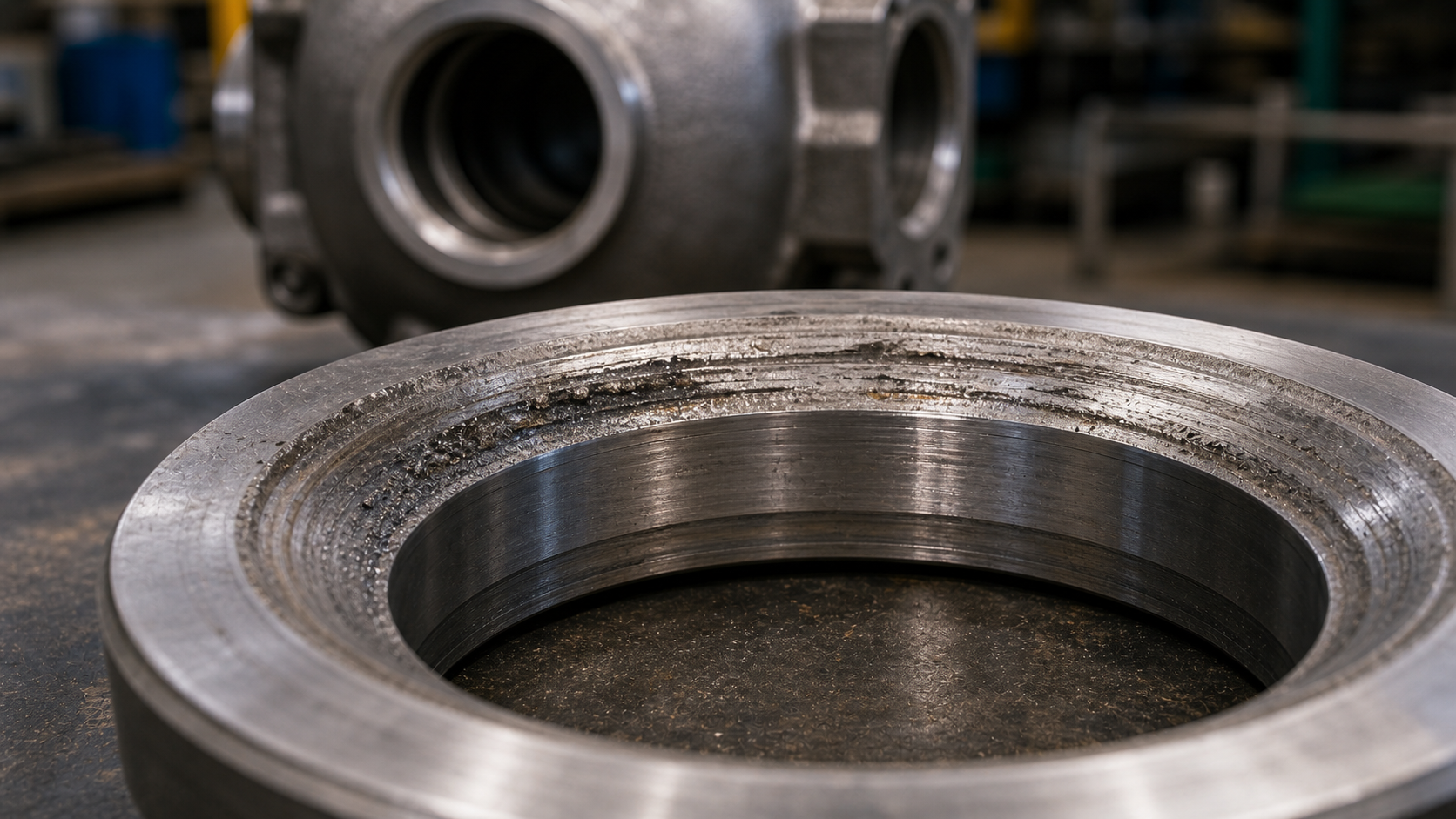
Standard stainless seats may perform acceptably in clean, moderate service, but they often struggle when sliding contact, erosion, and adhesive wear happen together. In those cases, the material selection is no longer just a hardness question. The seat needs a combination of wear resistance, anti-galling behavior, surface stability, and enough corrosion tolerance for the real fluid and temperature conditions.
A severe service seat material is chosen because the cost of failure is high. Leakage can mean shutdowns, unstable control performance, lost isolation, and repeated maintenance. Buyers therefore evaluate the seat as part of a sealing system, not as a generic wear part.
What Are Cobalt Alloy Valve Seats?
Cobalt alloy valve seats are seat components or seat surfaces made from cobalt-based wear alloys, often called CoCr or Stellite family materials. These alloys are used because their cobalt-rich matrix behaves well under sliding contact and elevated temperature, while chromium and tungsten or other carbides help resist scoring, abrasion, and edge wear.
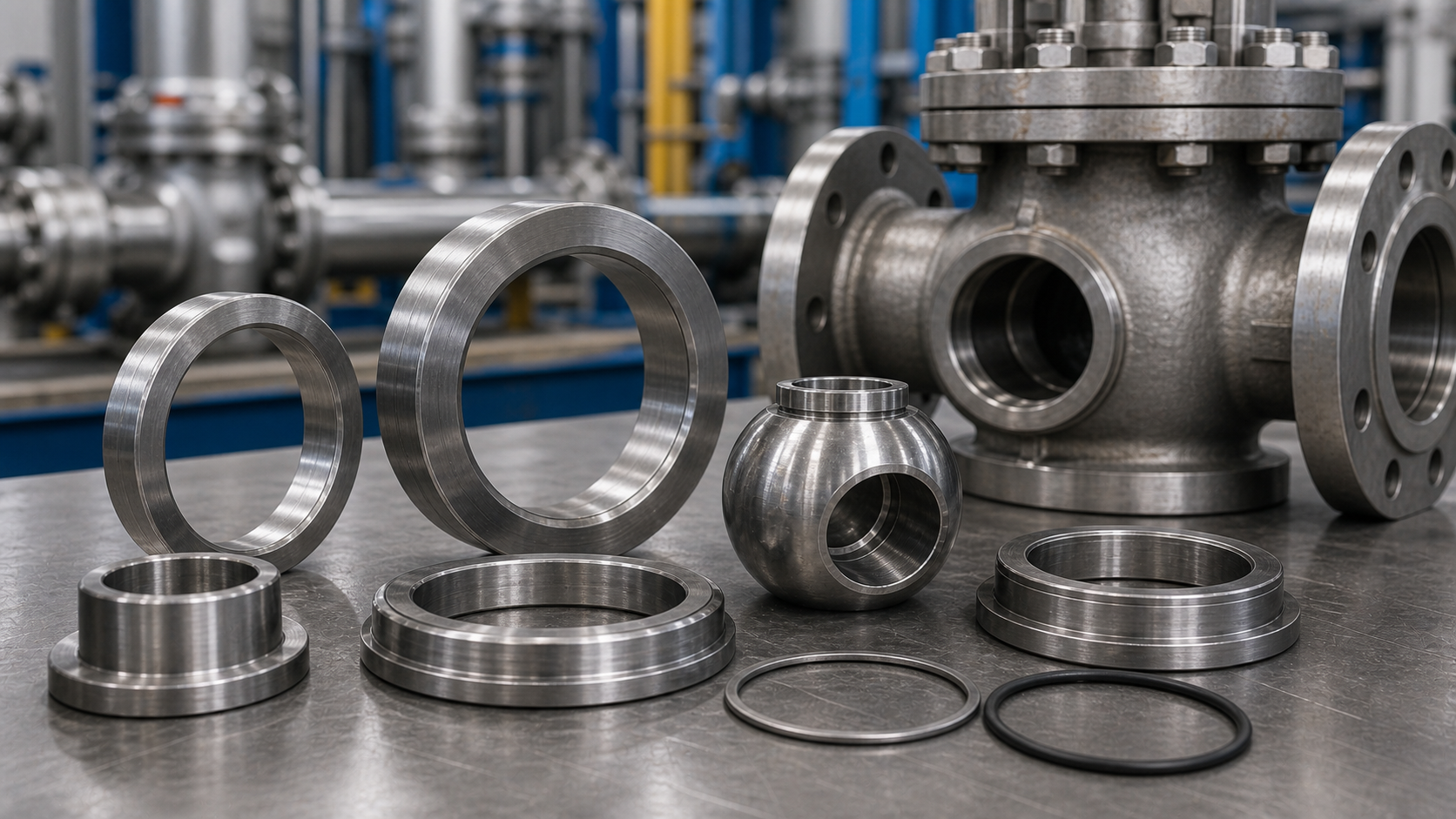
In practice, a cobalt alloy valve seat may be a solid cobalt alloy ring, a cobalt alloy insert, or a hardfaced surface on a steel or stainless substrate. The right form depends on geometry, cost, base material requirements, and how much cobalt alloy is actually needed at the working surface.
Typical applications include gate valves, globe valves, control valves, choke valves, ball valves, and other severe service trim where the seat must tolerate more than simple static compression.
Key Performance Requirements for Severe Service Valve Seats
A valve seat for severe service must first preserve sealing geometry. Once the seat face washes out, galls, or develops a rough track, leakage usually accelerates because flow concentrates at the damaged point. Geometry retention is therefore just as important as bulk hardness.
Wear resistance matters, but the wear mode must be understood. Some services are dominated by particle abrasion. Others are dominated by adhesive wear, impact, hot sliding contact, or corrosion-wear. A good seat material should resist the dominant failure mode without creating a new weakness such as brittle cracking or poor machinability.
Thermal stability, compatibility with the mating surface, and manufacturability also matter. A material that looks strong on paper can still fail if it is too crack-sensitive in hardfacing, too brittle for impact, or too difficult to finish to the required sealing band and roughness.
Common Cobalt Alloy Grades for Valve Seats
The most common cobalt alloy grade for valve seats is Stellite 6 because it offers a balanced combination of hardness, anti-galling behavior, corrosion-wear resistance, and practical manufacturability. It is often the default starting point when engineers need a seat material for mixed wear conditions.
Higher-carbon and higher-hardness grades such as Stellite 12 or Stellite 1 can offer stronger resistance in heavily abrasive conditions, but that gain usually comes with trade-offs in toughness, crack sensitivity, or machining difficulty. They are not simply better versions of Stellite 6; they fit narrower operating windows.
Grade selection should therefore be tied to actual failure mechanisms, leakage consequences, and manufacturing route. If galling and general wear are the main issues, Stellite 6 is often appropriate. If abrasive scoring dominates and impact is limited, a harder grade may deserve consideration, but only with process controls that keep cracking and finish-machining risk acceptable.
Stellite 6 Valve Seats
Stellite 6 is widely specified for valve seats because it gives a useful balance rather than an extreme property. It resists galling better than many iron-based materials, maintains good surface behavior under sliding contact, and offers enough hardness for many erosion and abrasion scenarios without becoming the hardest or most brittle option in the family.
For severe service valves, this balance is valuable because seat damage is often mixed damage. A contact band may see solids, vibration, pressure cycling, and occasional corrosive attack in the same service interval. A grade that only excels in one narrow wear mode may not survive the whole combination as effectively as Stellite 6.
This is also why Stellite 6 remains common in both solid seats and hardfaced seat surfaces. It is practical for real manufacturing and maintenance programs, not just idealized lab comparisons.
Stellite 12 and Other Higher-Hardness Options
When the service is dominated by more aggressive abrasion or higher surface loading, buyers may look at Stellite 12 or other harder cobalt alloys. These grades can offer improved resistance to cutting wear and surface deformation, especially where the seat sees more severe particle attack or a rougher contact environment.
The trade-off is that harder cobalt alloys can be less forgiving. They may be more difficult to machine, more sensitive to cracking in deposition, and less tolerant of impact or thermal stress. A harder grade should therefore be chosen because the service genuinely requires it, not because maximum hardness sounds safer.
In many purchasing decisions, the correct question is not whether a harder grade exists, but whether the added hardness solves the actual field failure better than a balanced grade and a well-controlled manufacturing process.
Solid Cobalt Alloy Seats vs Hardfaced Valve Seats
A solid cobalt alloy seat provides cobalt alloy properties through the section, which can be useful for smaller parts, highly loaded contact zones, or designs where a full cobalt alloy component is justified. The trade-off is cost, harder machining, and more sensitivity to raw material price.
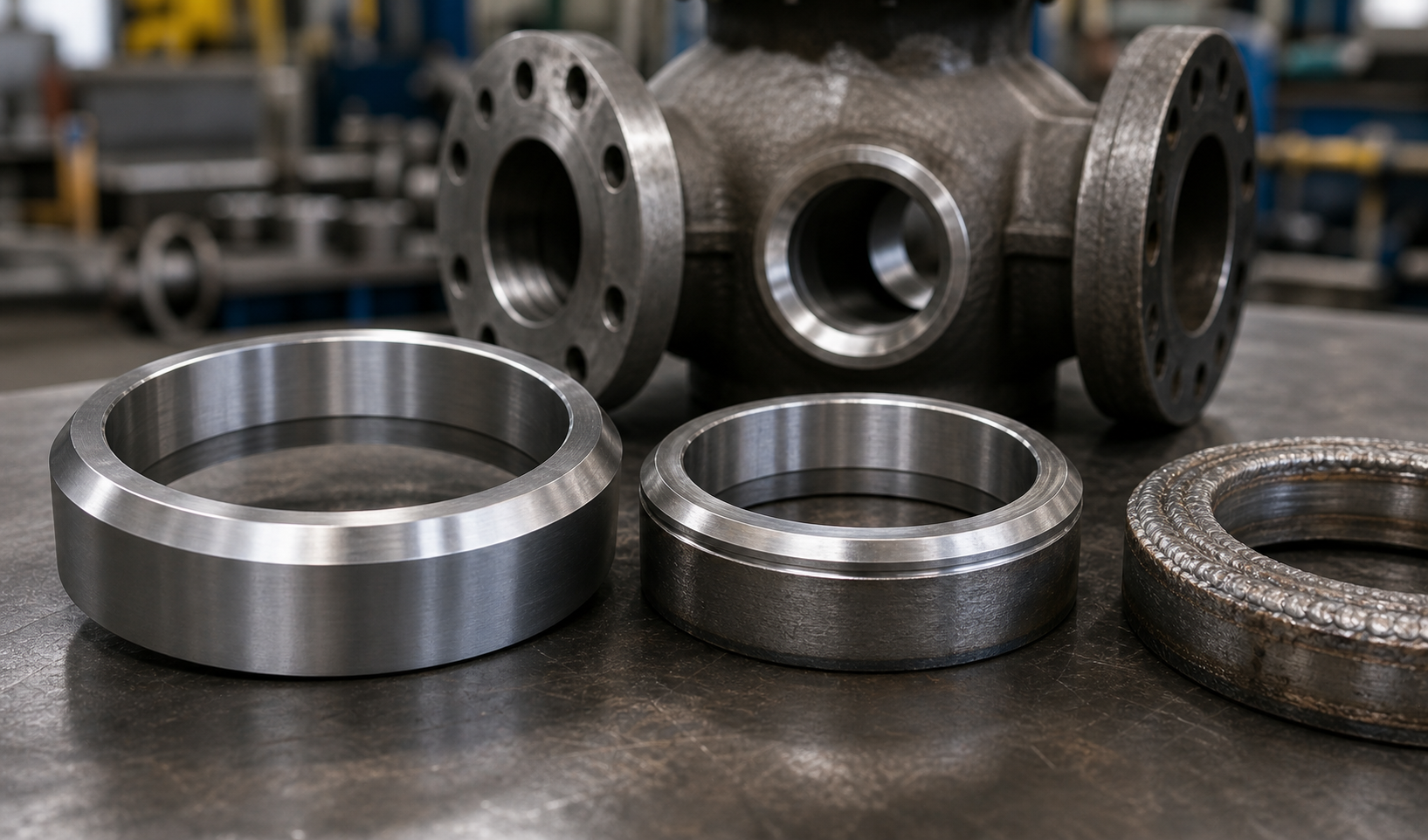
A hardfaced valve seat uses steel or stainless as the structural base and deposits cobalt alloy only on the working surface. This approach is common because it balances cost with function, but it introduces process risks such as dilution, cracking, porosity, and insufficient remaining overlay thickness after finish machining.
Choosing between solid and hardfaced construction depends on geometry, service severity, repair philosophy, and supplier capability. A poorly controlled hardfaced seat can fail earlier than a well-made solid seat, but a properly controlled hardfaced seat is often the most practical industrial solution.
Manufacturing Methods for Cobalt Alloy Valve Seats
Cobalt alloy valve seats can be produced through casting followed by machining, powder metallurgy routes, or machining from wrought or preformed stock depending on the part geometry and grade availability. These routes are typically used for solid components or inserts.
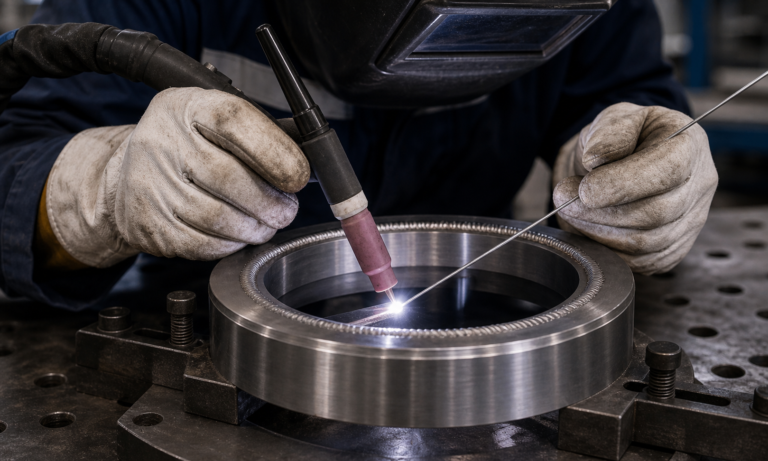
For hardfaced seats, common deposition methods include TIG hardfacing, PTA welding, and laser cladding. Each route has different implications for heat input, dilution, bead geometry, repeatability, and final machinability. TIG is flexible and practical for many custom parts. PTA is often attractive for repeatable overlays. Laser cladding can reduce dilution when the setup is properly qualified.
The manufacturing method should be matched to the part and the acceptance criteria. Buyers should not treat all cobalt alloy seat manufacturing routes as interchangeable.
Custom Manufacturing Considerations
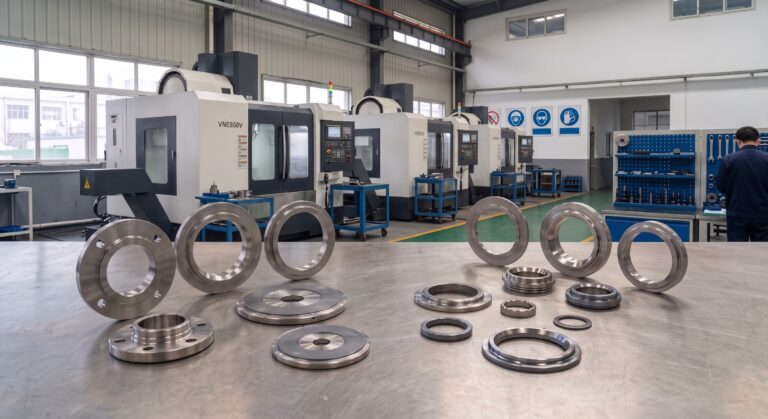
Custom valve seat manufacturing is not just about making the outer diameter and thickness. The functional details include seating angle, seat width, concentricity, runout, edge condition, surface finish, and how the seat interfaces with the mating component. These details decide whether the part seals after installation, not just whether it fits in the valve.
Drawings should define critical tolerances clearly and avoid leaving key sealing features open to interpretation. This is especially important when the supplier must manage both the deposition route and the final machining process.
Batch consistency matters as well. A supplier that can make one good sample but cannot repeat hardness, overlay thickness, and finish quality across production lots still creates risk for the buyer.
Quality Inspection and Testing Requirements
Inspection should focus on the surface that actually does the sealing. Common checks include hardness, critical dimensions, surface finish, visual inspection, and penetrant testing for surface cracks where applicable. For hardfaced seats, buyers may also ask how overlay thickness and dilution are controlled or verified.
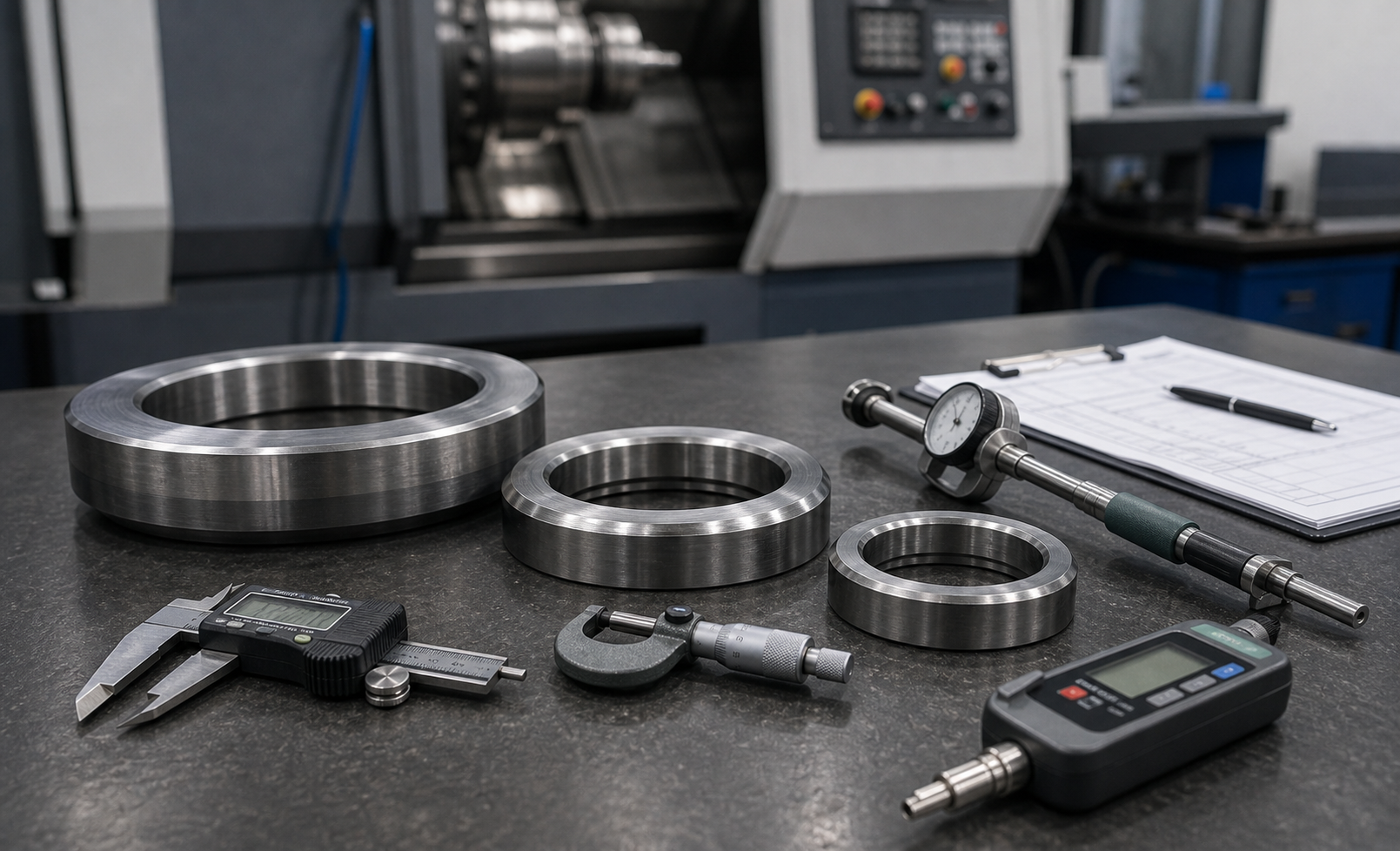
Chemical composition review, material certificates, and traceability records are important because cobalt alloy seat performance depends on the real deposited or supplied chemistry, not only the nominal grade name on a quote. Some projects may also require UT or additional NDT depending on geometry and risk level.
A strong inspection plan does more than produce paperwork. It confirms that the seat delivered to the buyer still matches the service conditions it was specified for after welding, machining, and final finishing. For procurement teams, that is the difference between buying a nominal alloy and buying a dependable sealing surface.
How to Choose a Cobalt Alloy Valve Seat Supplier
A capable supplier should be able to discuss failure modes, grade selection, deposition options, machining sequence, and inspection controls in specific terms. Generic claims such as high wear resistance or superior quality are not enough for severe service work.
Buyers should ask what cobalt alloy grades the supplier actually manufactures regularly, which hardfacing processes are qualified, how cracking and dilution are controlled, and how the final sealing face is inspected. Examples from valve trim or similar severe service components are more useful than unrelated wear-part references.
Delivery stability and documentation are also part of supplier capability. Severe service components often fail because process control is inconsistent, not because the nominal grade choice was obviously wrong.
FAQ
What is the most common cobalt alloy grade for valve seats?
In many valve applications, Stellite 6 is the most common choice because it balances wear resistance, anti-galling behavior, corrosion-wear performance, and manufacturability.
Are solid cobalt alloy seats always better than hardfaced seats?
No. Solid seats can be attractive in some designs, but a properly controlled hardfaced seat is often more economical and entirely suitable for severe service.
How should buyers evaluate a custom valve seat supplier?
Focus on actual process capability, machining control, inspection evidence, and repeatability rather than only the material name on the quotation.