
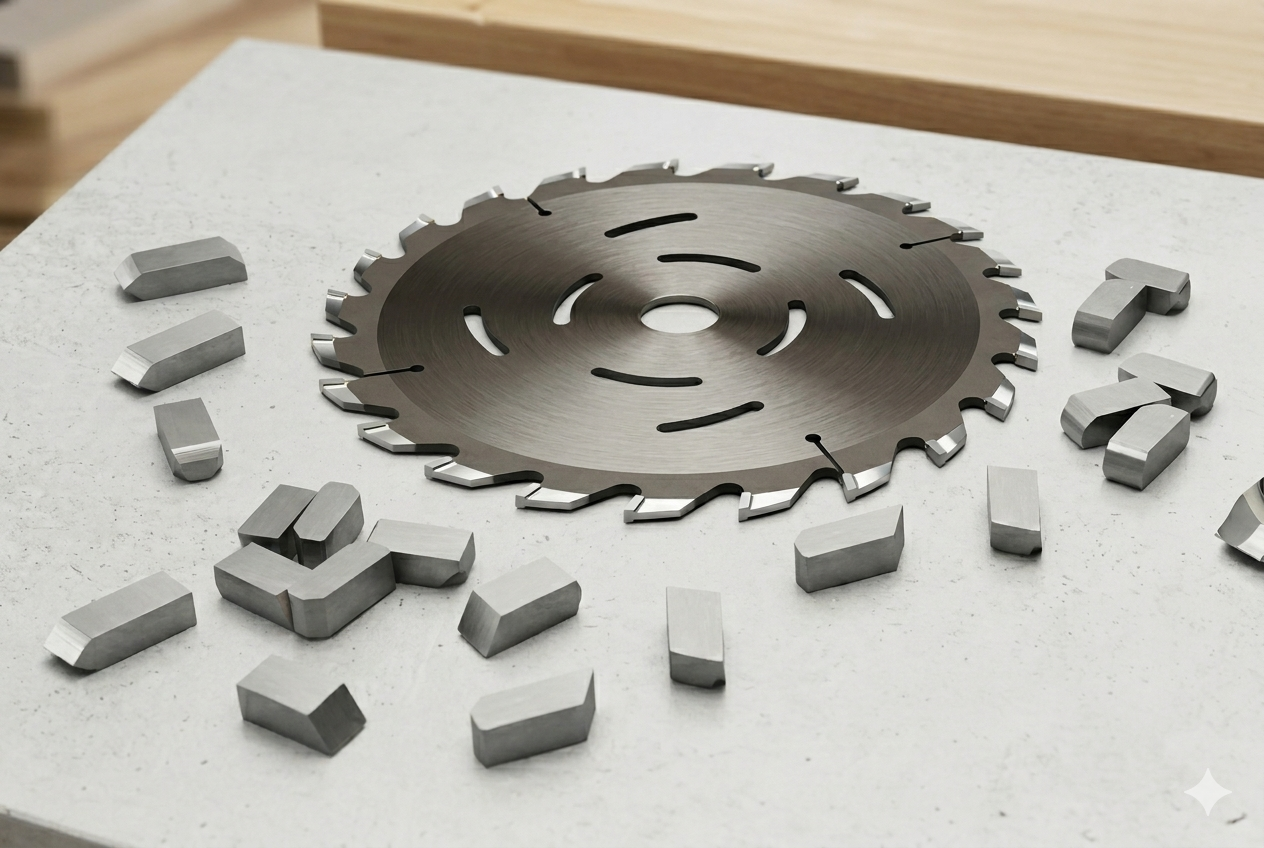
Tired of saw blades dulling too quickly? Constant downtime for sharpening is frustrating and eats into profits. Stellite tips offer a superior, long-lasting solution for your woodworking operations.
Yes, Stellite saw tips are a game-changing upgrade for professional woodworking. They provide exceptional wear and heat resistance, far surpassing traditional materials. This results in longer blade life, fewer sharpening cycles, and cleaner cuts, especially when processing difficult or abrasive woods.
This all sounds great on paper, but you are probably asking if the investment is truly worth it. I get it. I remember talking with a project manager for a large sawmill who was skeptical. He saw the higher initial cost and couldn’t see past it. It was only after we broke down the long-term savings in downtime, labor, and blade life that he saw the light. Let’s go through that same process together and look at the real-world benefits. We can explore what makes Stellite so effective and how it can transform your cutting operations.
What Makes Stellite Different from Carbide Tips?
Choosing the wrong tip material leads to frequent blade changes and production halts. Carbide is a reliable standard, but is it truly the best for your toughest jobs?
Stellite is a cobalt-chromium alloy, while carbide is tungsten carbide cemented with cobalt. Stellite is inherently tougher, less brittle, and more resistant to heat and corrosion. This unique combination means it withstands impact and high temperatures without chipping or losing its edge.

Let’s dive deeper into what separates these two high-performance materials. On the surface, both seem to do a similar job, but their core properties dictate how they perform under stress. I’ve worked with many clients who made the switch from carbide, and their feedback highlights these key differences. The main distinction isn’t just about hardness; it’s about a balance of properties.
Material Composition and Properties
Carbide, specifically tungsten carbide, is incredibly hard. This is great for resisting abrasive wear. However, this extreme hardness comes with a trade-off: brittleness. It’s more susceptible to chipping or fracturing if it hits a knot, a nail, or even just from the high-impact vibration of cutting frozen wood.
Stellite, on the other hand, is an alloy based on cobalt and chromium. It is not as hard as tungsten carbide, but it is significantly tougher. This toughness allows it to absorb impact and resist cracking where a carbide tip might fail. A key property is its “work hardening” ability, where the cutting edge actually becomes harder and more wear-resistant as it is used. It also has a low coefficient of friction and excellent heat resistance, which means less heat buildup at the cutting edge.
| Feature | Stellite (e.g., Grade 12) | Tungsten Carbide |
|---|---|---|
| Primary Elements | Cobalt, Chromium, Tungsten | Tungsten, Carbon, Cobalt (binder) |
| Hardness | Good (Approx. 48 HRC) | Excellent (Approx. 70 HRC) |
| Toughness | Excellent | Fair (can be brittle) |
| Heat Resistance | Excellent | Good (can soften at high temps) |
| Corrosion Resistance | Excellent | Good |
| Failure Mode | Wears down gradually | Can chip or fracture suddenly |
This balance makes Stellite ideal for saw blades that need to last. The blade doesn’t fail catastrophically; it just wears gracefully, giving you predictable performance and a much longer service life between sharpenings.
How Do Stellite Tips Improve Cutting Performance and Blade Life?
Are your saws struggling with hard, resinous, or frozen wood? A dulling blade not only produces poor-quality cuts but also puts unnecessary strain on your equipment, leading to costly damage.
Stellite tips maintain a sharp edge much longer because they resist heat and abrasive wear. This delivers cleaner cuts with less burning, reduces blade body stress and cracking, and drastically extends the time between sharpening, maximizing your operational uptime.
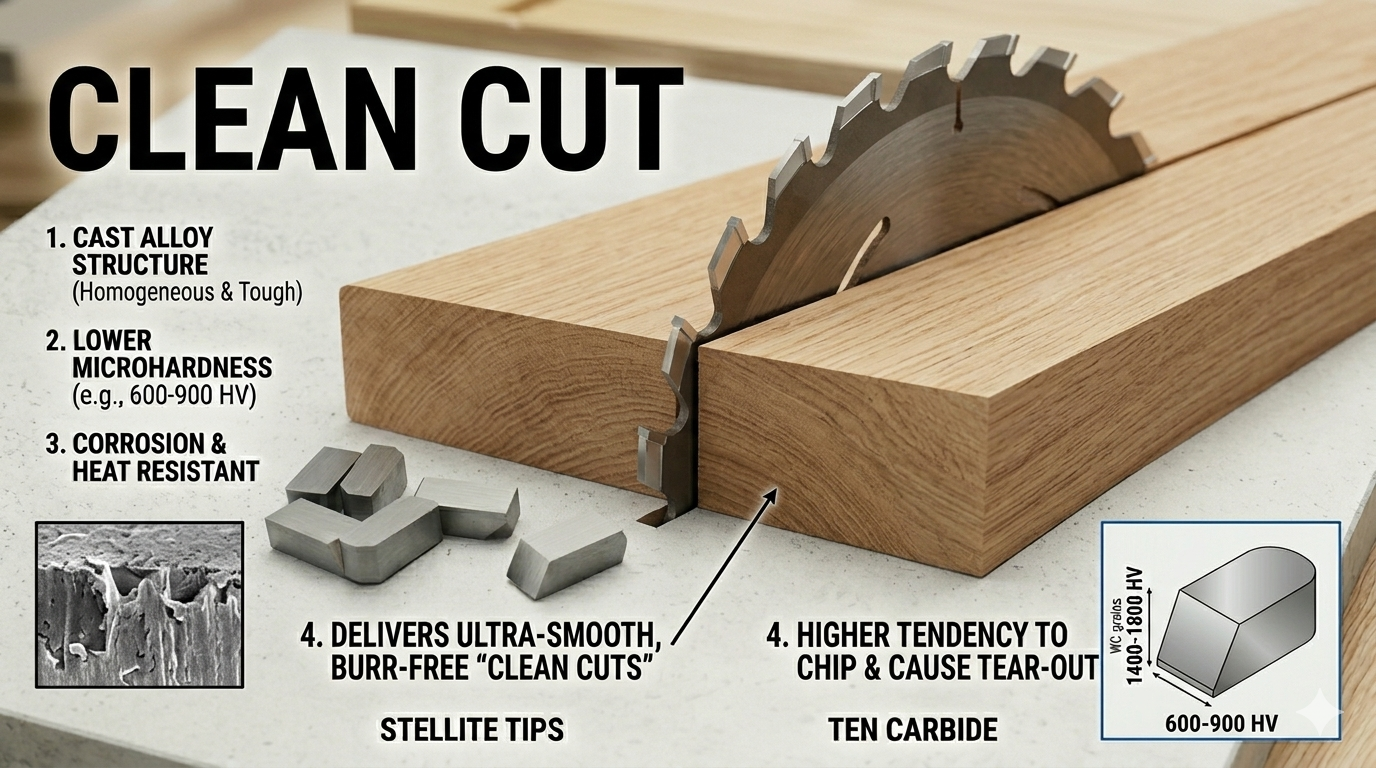
The real value of Stellite tips becomes clear when you look at their impact on daily operations. It’s not just about a “better” blade; it’s about a more efficient and profitable process. I once worked with a furniture manufacturer who specialized in exotic hardwoods. Switching to Stellite-tipped blades, their product quality went up, and their material waste went down. This is how Stellite delivers tangible results.
Fewer Sharpening Cycles Means More Uptime
This is the most immediate economic benefit. Let’s imagine a typical bandsaw blade with carbide tips needs to be removed for sharpening every 8-10 hours of operation. A Stellite-tipped blade, under the same conditions, can often run for 24 hours or even longer. In some cases, I’ve seen them last three to five times longer. Think about what that means: for every three times you would have stopped production to change a carbide blade, you only stop once with a Stellite blade. This is a massive reduction in downtime and the labor costs associated with blade maintenance. The saw is cutting, and you are making money.
Superior Cut Quality and Consistency
A sharper edge for a longer time means a better cut. Stellite’s ability to dissipate heat and resist wear prevents the tip from dulling and causing friction burns on the wood. This is crucial when cutting expensive hardwoods, veneers, or woods sensitive to heat. The cuts are cleaner, smoother, and more precise. This reduces the need for secondary finishing operations like sanding, saving time and labor in the next stage of production. A consistent cut quality also means less material is wasted due to defects.
Resilience in Demanding Conditions
- Hardwoods and Frozen Wood: Stellite’s superior toughness allows it to handle the impact of cutting dense hardwoods or frozen logs without chipping. Carbide tips can shatter in these conditions, leading to immediate blade failure.
- Resinous Woods: Woods like pine produce a sticky resin that can build up on hot saw tips, causing friction and poor performance. Stellite’s lower friction and excellent heat resistance reduce this buildup, keeping the blade cutting freely.
- Dirty or Reclaimed Wood: Cutting wood with hidden impurities like dirt, sand, or small stones is a death sentence for a brittle carbide tip. A Stellite tip is far more likely to withstand the impact and continue cutting.
What Should I Consider When Sourcing Stellite Saw Tips from China?
Sourcing specialized components internationally seems complex. You worry about quality, communication, and reliability. A bad supplier can lead to project delays and defective parts, costing you dearly.
When sourcing Stellite tips from China, prioritize supplier qualification, material certification (verifying the alloy grade), and a robust quality inspection process. Partnering with a sourcing coordinator simplifies communication, guarantees specifications are met, and manages logistics for you.
Choose the Right Alloy Grade
Not all Stellite is the same. There are different grades formulated for different applications. For saw tips, Stellite 12 is the most common choice. It provides an excellent balance of wear resistance and toughness required for most woodworking applications. Stellite 1 is harder but more brittle, better for extreme abrasion, while Stellite 6 is tougher and more corrosion-resistant, often used in valve components. It is critical that your supplier understands these differences and provides the correct grade. We always insist on material certificates from our manufacturing partners to verify the chemical composition of every batch.
Insist on Strict Quality Assurance
Quality control is non-negotiable. When we coordinate a project, we establish clear inspection criteria from the start. This includes:
- Dimensional Accuracy: The tips must match the drawing specifications perfectly to fit the saw body and ensure proper brazing or welding. We use calipers and gauges for pre-shipment inspection.
- Hardness Testing: We verify the Rockwell hardness (HRC) to ensure it falls within the specified range for the alloy grade. This confirms the material has been properly processed.
- Visual Inspection: We check for any cracks, porosity, or surface defects that could lead to premature failure. The tips must be clean and ready for tipping.
The Value of a Sourcing Partner
This is where my team and I come in. Think of us as your boots on the ground in China. We bridge the language and cultural gap. We translate your technical requirements into clear instructions for the factory. We monitor production, conduct inspections, and handle all the export paperwork and logistics. Instead of you juggling communication with a factory halfway around the world, you have a single point of contact dedicated to your project’s success. We turn a complex international transaction into a simple, reliable procurement process, just like ordering from a local supplier.
Conclusion
Stellite saw tips offer a clear performance advantage for serious woodworking. By partnering with a reliable sourcing expert, you can upgrade your operations, increase uptime, and improve your bottom line.