
Component failure causing costly downtime?
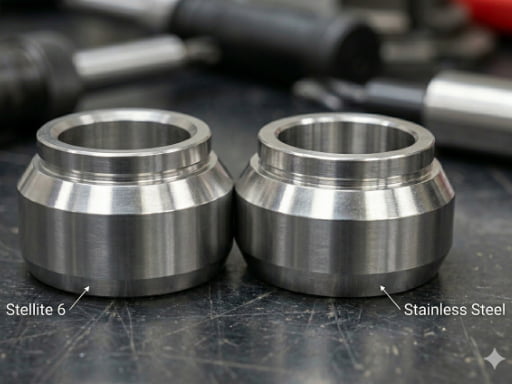
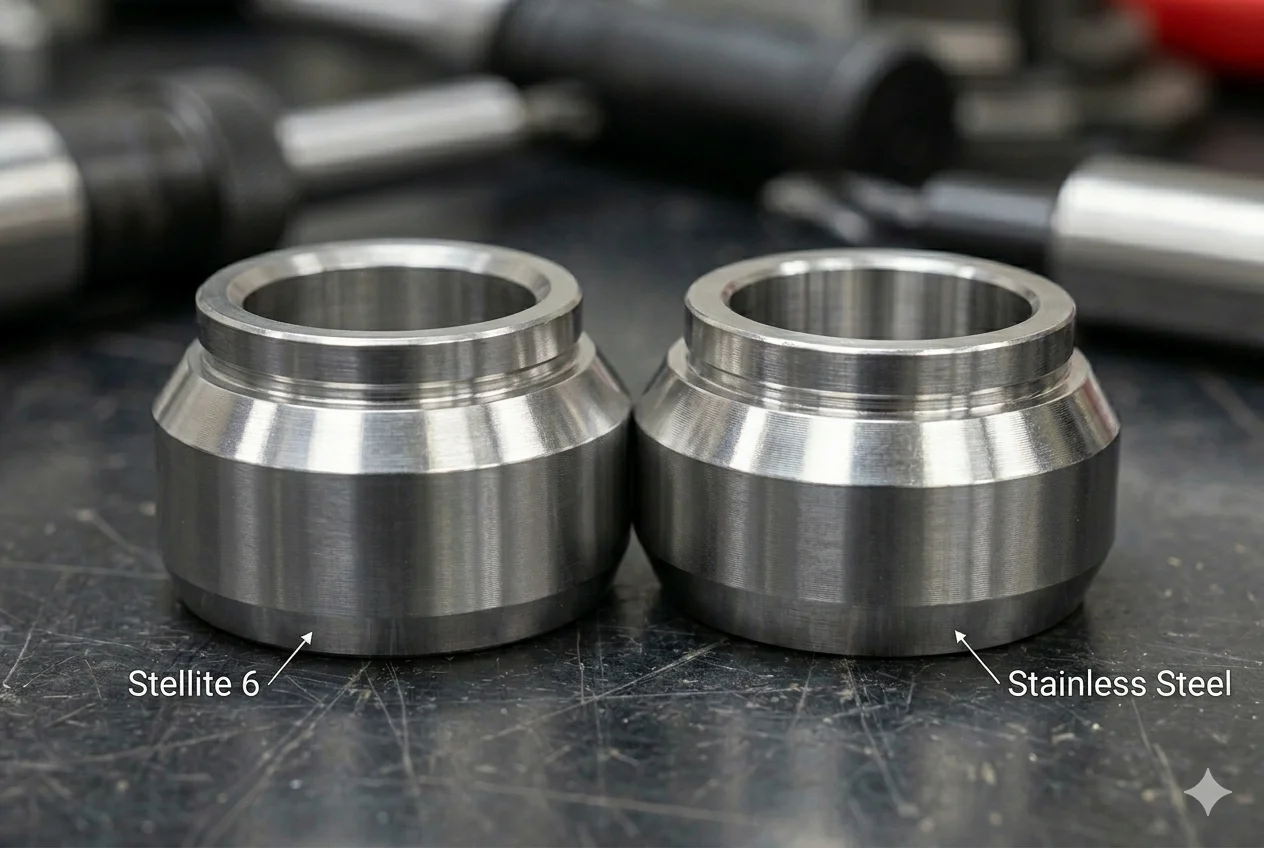
Choosing between Stellite 6 and stainless steel is critical. The wrong choice leads to frequent replacements and production halts. Stellite 6 offers superior resistance to combined wear, heat, and corrosion, making it ideal for severe applications. Stainless steel, while cheaper, is best for less demanding conditions where these factors are not present simultaneously. The right choice depends on your specific operational environment.
What makes wear resistance more than just a single number?
Is your component failing despite having good “wear resistance”? The term is often oversimplified. This leads to incorrect material choices and unexpected equipment breakdowns in your operations.
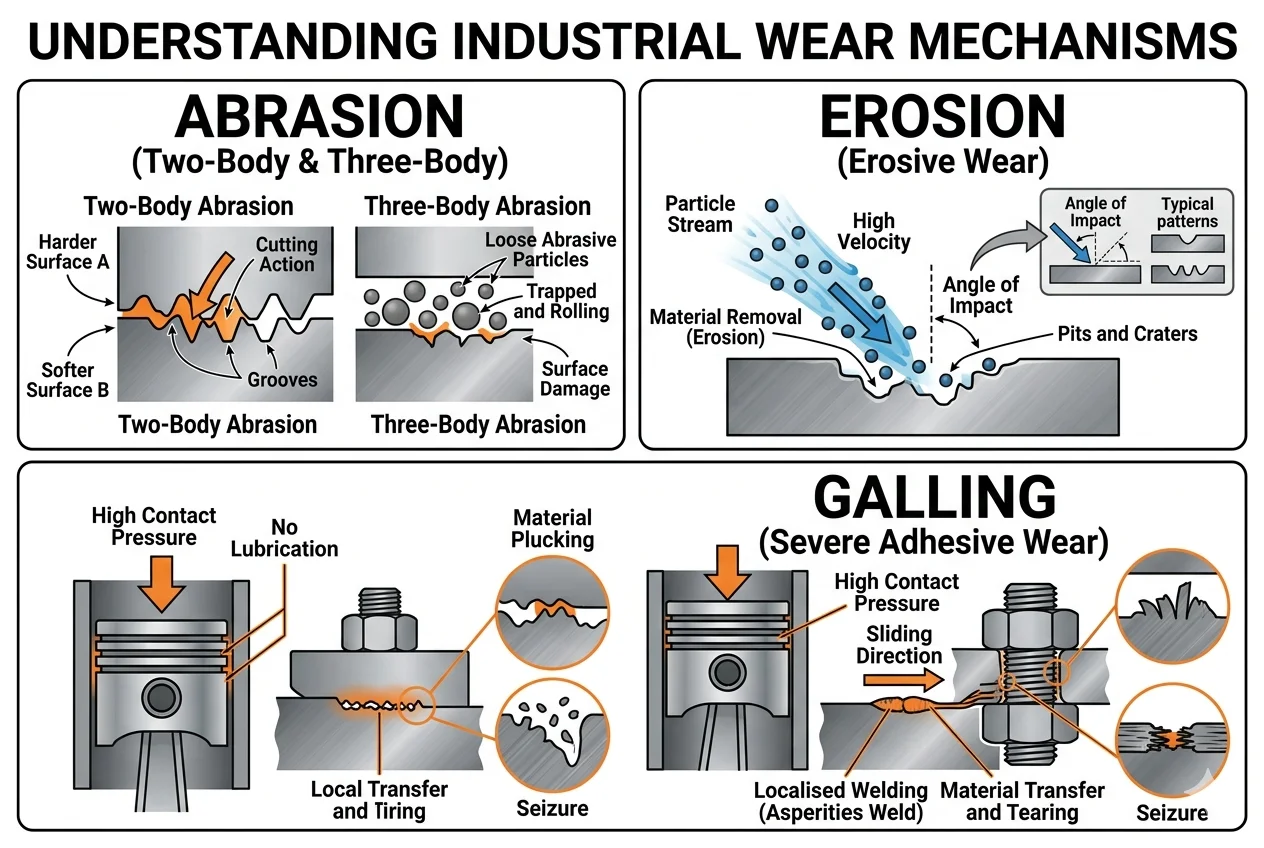
“Wear” is not one problem. It’s a combination of forces like galling (metal-on-metal friction), abrasion (scraping), erosion (fluid impact), and corrosion. Stellite 6 is engineered to handle these forces simultaneously, especially at high temperatures, a weakness for many stainless steels.
When a client tells me their 316SS valve trim seized, the first thing I ask about is the operating temperature. That’s usually where the problem starts. Stainless steel is a fantastic material, but it has limits. “Wear resistance” needs to be broken down to be useful. We need to look at the specific problem you’re trying to solve.
Galling and Seizing
Galling happens when two metal surfaces slide against each other under pressure, causing them to weld together. Stellite 6 has a low coefficient of friction and a unique microstructure that makes it extremely resistant to galling, even at high temperatures. Many stainless steels, especially austenitic grades like 304 or 316, are prone to galling, which can cause components to seize and fail completely.
Abrasive and Erosive Wear
Abrasion is caused by hard particles scraping against a surface, while erosion is wear from particles in a fast-moving fluid. The hard carbides in Stellite 6’s structure give it excellent resistance to both. Martensitic stainless steels like 440C also have good hardness and abrasion resistance, but they lose that hardness quickly as temperatures rise. Stellite 6 maintains its hardness at high temperatures, a property we call “hot hardness.”
The Corrosion Factor
Stellite 6 offers excellent corrosion resistance, comparable to 316 stainless steel in many environments. The critical difference is that Stellite 6 maintains this resistance while also withstanding high heat and wear. Stainless steel can lose its protective passive layer under combined mechanical stress and high temperatures, leading to rapid failure.
| Feature | Stellite 6 | Austenitic SS (e.g., 316) | Martensitic SS (e.g., 440C) |
|---|---|---|---|
| Galling Resistance | Excellent | Poor | Fair |
| Hot Hardness | Excellent | Poor | Poor |
| Abrasion Resistance | Very Good | Fair | Good |
| Corrosion Resistance | Very Good | Excellent | Fair |
| Best For | Combined high heat, wear & corrosion | General corrosion resistance | Abrasion at low temperatures |
How do you calculate the true cost beyond the initial price tag?
Is your budget focused only on the upfront material cost? This narrow view often ignores the massive hidden expenses of downtime, labor, and lost production from premature part failure.
The true cost is the Total Cost of Ownership (TCO). Stellite 6’s higher initial price is often offset by longer service life, fewer replacements, and reduced downtime. Calculate TCO by factoring in replacement labor, lost production hours, and maintenance frequency.
Calculating Downtime Costs
This is often the biggest hidden expense. If a critical valve fails, how much production is lost per hour? Multiply that by the number of hours it takes to shut down, replace the part, and restart the line. For many operations, this number is staggering. A Stellite 6 component that lasts three times longer than a stainless steel one eliminates two of these costly downtime events.
Factoring in Labor and Maintenance
Replacing a failed part isn’t free. You have labor costs for the maintenance team, costs for any special equipment needed, and the administrative cost of ordering and stocking replacement parts. If a stainless steel part needs to be replaced three times a year, while a Stellite 6 part lasts for two years, the maintenance savings alone can be substantial.
The Risk of Unexpected Failure
A planned shutdown for maintenance is one thing. An unexpected failure that shuts down production without warning is another. It can lead to safety risks, damage to other equipment, and missed delivery deadlines. Choosing a more reliable material like Stellite 6 for a critical application is a form of risk management. It provides a more predictable and stable operational environment. You are buying reliability.
| Cost Factor | Cheaper Material (e.g., SS) | Premium Material (e.g., Stellite 6) |
|---|---|---|
| Initial Purchase Price | $100 | $500 |
| Lifespan | 1 Year | 4 Years |
| Replacements in 4 Years | 3 | 0 |
| Cost of Lost Production/Replacement | $5,000 per event | $5,000 per event |
| Total 4-Year Cost | $100 + (3 x $5,000) = $15,100 | $500 + (0 x $5,000) = $500 |
When is stainless steel actually the right choice?
Worried about over-engineering a solution and wasting money? Choosing Stellite 6 when it’s not needed can be just as costly as choosing a material that fails prematurely.
Stainless steel is the right choice when the application doesn’t involve combined high heat and severe wear. For components in moderately corrosive environments at ambient temperatures or with light abrasive wear, grades like 316L or 440C offer a cost-effective and reliable solution.
My job isn’t to sell the most expensive alloy. It’s to help you find the most reliable and cost-effective one for your specific problem. Sometimes, that’s a high-grade stainless steel, and that’s a good decision. The key is to match the material to the actual demands of the job.
Applications for Austenitic Stainless Steel (e.g., 316)
Austenitic grades like 316 and 316L are excellent for handling corrosive fluids at low to moderate temperatures where there is no metal-to-metal sliding wear. Think of tanks, pipes, and structural components in chemical processing or marine environments. Their toughness and corrosion resistance are top-notch, but they are not designed for high-wear or galling applications.
When to Use Martensitic Stainless Steel (e.g., 440C)
Martensitic grades like 440C can be heat-treated to a high hardness. This makes them great for applications requiring abrasion resistance at room temperature, such as knife edges, bearings, or nozzles. However, they lack the corrosion resistance of 316 and will lose their hardness at elevated temperatures, making them unsuitable for environments where Stellite 6 excels.
A Quick Checklist for Your Decision
| Question to Ask | If “Yes” | If “No” |
|---|---|---|
| Is the operating temp above 400°C (750°F)? | Lean towards Stellite 6 | Stainless steel may be sufficient |
| Is galling or metal-to-metal wear a key failure mode? | Lean towards Stellite 6 | Martensitic SS might work |
| Is severe corrosion present with mechanical wear? | Lean towards Stellite 6 | Austenitic SS might work |
| Is component failure catastrophic to operations? | Lean towards Stellite 6 | Stainless steel is lower risk |
Conclusion
Choosing between Stellite 6 and stainless steel is a risk management decision. Analyze your specific wear conditions and total cost to ensure long-term reliability and operational efficiency.